You must be logged in to perform this action.
Read the Fine Print

-
(Complete Item Description)
- Abstract:
The exhibition 1492: AN ONGOING VOYAGE describes both pre- and post-contact America, as well as the Mediterranean world at the same time. Compelling questions are raised, such as: Who lived in the Americas before 1492? Who followed in the wake of Columbus? What was the effect of 1492 for Americans throughout the Western Hemisphere? The Library of Congress' Quincentenary exhibition addresses these questions, as well as other related themes, including fifteenth century European navigation, the myths and facts surrounding the figure of Columbus, and the differences and similarities between European and American world views at the time of contact.
- Subject:
- Social Sciences
- Grade Level:
- Primary, Secondary, Post-secondary
- Collection:
-
Library of Congress
Read the Fine Print

-
(Complete Item Description)
- Abstract:
Everything teachers and students need for a successful National History Day project is available at this site -- topic ideas, lesson plans, research advice, and thousands of pages of fully indexed eyewitness accounts of North American exploration. Follow famous explorers. Witness first contacts between cultures. See how the exchange of goods and ideas forever altered people's daily life and ideas. Find out what "America" meant to the people who arrived here long ago and to the people who greeted them. Re-discover what it means to you.
American Journeys puts thousands of pages of direct evidence about early American exploration and settlement in the hands of teachers and students twenty-four hours a day, seven days a week, whether they're in the classroom, at the library, in their home, or using a laptop on the go.
- Subject:
- Humanities, Social Sciences
- Grade Level:
- Primary, Secondary
- Collection:
-
Wisconsin Historical Society
Read the Fine Print

-
(Complete Item Description)
- Abstract:
Cooperating with faculty at UNC-CH, and with the scholars who commission custom maps from the AWMC for their publications, we are developing a collection of free digital maps for educational use. This effort gives teachers and students an expanding set of small-scale reference maps for classroom and personal use. Each may be downloaded from the website in multiple formats. A blank version of each map -- suitable for map quizzes and customization -- is usually available.
- Subject:
- Humanities, Social Sciences
- Grade Level:
- Primary, Secondary, Post-secondary
- Collection:
-
University of North Carolina, Chapel Hill
No Strings Attached

-
Read the Fine Print

-
(Complete Item Description)
- Abstract:
Adam Savage walks through two spectacular examples of profound scientific discoveries that came from simple, creative methods anyone could have followed -- Eratosthenes' calculation of the Earth's circumference around 200 BC and Hippolyte Fizeau's measurement of the speed of light in 1849. A quiz, thought provoking question, and links for further study are provided to create a lesson around the 7-minute video. Educators may use the platform to easily "Flip" or create their own lesson for use with their students of any age or level.
- Subject:
- Science and Technology
- Grade Level:
- Secondary, Post-secondary
- Collection:
-
TED-Ed
Read the Fine Print

-
(Complete Item Description)
- Abstract:
The materials in this packet allow teachers and students to explore the earliest recorded history of the Pacific Northwest. The packet consists of roughly 30 primary documents, along with supplemental materials to help place the primary sources in historical context. These materials document the range of interactions and relationships between Native and Non-Native peoples along the Northwest Coast in the late 18th and early 19th centuries.
- Subject:
- Humanities
- Grade Level:
- Secondary
- Collection:
-
University of Washington
Read the Fine Print

-
(Complete Item Description)
- Abstract:
This site offers maps, manuscripts, timelines, and photos related to the famed expedition. It includes resources for learning about Meriwether Lewis, Sacagawea, Congress's role in the Louisiana Purchase, and Thomas Jefferson's life-long commitment to western exploration.
- Subject:
- Humanities, Social Sciences
- Grade Level:
- Primary, Secondary
- Collection:
-
Library of Congress
No Strings Attached

-
(Complete Item Description)
- Abstract:
This lesson presents 13 documents and photos related to the 1804-6 expedition into the newly acquired Louisiana Territory. The documents include a list of Indian presents Lewis purchased, his receipts for wine and tobacco, Jefferson's letter to Madison announcing the purchase of Louisiana, and Jefferson's message to Congress communicating the discoveries of the expedition.
- Subject:
- Humanities, Social Sciences
- Grade Level:
- Primary, Secondary
- Collection:
-
National Archives and Records Administration
Read the Fine Print

-
(Complete Item Description)
- Abstract:
This site features maps of the famous expedition. The Corps of Discovery collected 30 maps from Indians, trappers, and traders, and prepared 140 maps -- most of them drawn or compiled by Clark. The website shows the King map (created for the expedition) and the first map displaying their geographical discoveries. Descriptions of expedition members, life on the trail, and help provided by Indian tribes are included.
- Subject:
- Humanities, Social Sciences
- Grade Level:
- Primary, Secondary
- Collection:
-
Smithsonian Institutions
Read the Fine Print

-
(Complete Item Description)
- Abstract:
This unit focuses on Meriwether Lewis's preparations for the expedition. It uses Lewis's trip to Philadelphia as a foundation for students to consider the idea that life is a journey of discovery. Students will understand some of the challenges inherent in preparing for the unknown and will learn about the preparations necessary for Lewis and Clark's expedition. They will use maps and paintings to gather information about Philadelphia in 1803. By reading primary and secondary documents, students will learn about the people Lewis met with in Philadelphia, and they will discover why each person's area of expertise was deemed important for Lewis's preparation. Students will gather and classify information from documents to determine what items were taken along on the expedition and for what purposes. They will learn how discoveries can be guided and shaped by expectations, supplies, and knowledge. Students will reflect upon the idea that our life is a journey of discovery, and along the way we need to prepare by predicting what we will need to have and what we will need to know.
- Subject:
- Humanities, Social Sciences
- Grade Level:
- Primary
- Collection:
-
Missouri Historical Society
Read the Fine Print

-
(Complete Item Description)
- Abstract:
Indian women influenced the expedition despite the fact that Lewis and Clark had little direct contact with them. All along the way, Lewis and Clark wrote that Indian women were oppressed; they failed, however, to see the various powers that these women possessed. Their understanding of a woman's role in society was based on a Euro-American model. Sacagawea was the only woman to accompany Lewis and Clark on their journey west. It is the goal of this unit to investigate both Sacagawea's role as the sole woman on the journey and the role of Indian women on the northern plains during this time period.
- Subject:
- Humanities, Social Sciences
- Grade Level:
- Primary, Secondary
- Collection:
-
Missouri Historical Society
Read the Fine Print

-
(Complete Item Description)
- Abstract:
This site includes maps created back to the early 16th century, when exploration and new discoveries brought the need for improved information about the world. The maps, most of which are hand drawn, depict portions of five continents and were prepared by cartographers from Spain, Portugal, France, Great Britain, the Netherlands, Latin America countries, and the U.S., among others. The maps represent different national and political interests and perspectives, at various periods of time.
- Subject:
- Social Sciences
- Grade Level:
- Secondary, Post-secondary
- Collection:
-
Library of Congress
Read the Fine Print

-
(Complete Item Description)
- Abstract:
In the United States, the nineteenth century was a time of tremendous growth and change. The new nation experienced a shift from a farming economy to an industrial one, major westward expansion, displacement of native peoples, rapid advances in technology and transportation, and a civil war. In this lesson, works of art from the nineteenth century are paired with written documents, including literary selections, a letter, and a speech. As budding historians, students can use these primary sources from the nineteenth century to reconstruct the influence of technology, geography, economics, and politics on daily life.
In this lesson students will: Learn about daily life in the United States in the 1800s through visual art and literature; Understand some of the ways in which nineteenth-century life was affected by technology, geography, economics, and politics; Apply critical-thinking skills to consider the various choices artists and writers have made in depicting daily life around them; Make personal connections to the nineteenth century by placing themselves in the contexts of works of art and readings.
- Subject:
- Arts, Humanities, Social Sciences
- Grade Level:
- Primary, Secondary
- Collection:
-
National Gallery of Art
Read the Fine Print

-
(Complete Item Description)
- Abstract:
This packet provides materials that relate to the history of homesteading in Washington state. In many respects homesteading was a national story, born of an era when the United States was both agrarian and expansionist. The major themes of this packet invite teachers and students to think about how regional, state, and local history fit within the broader American context.
- Subject:
- Humanities, Social Sciences
- Grade Level:
- Primary, Secondary
- Collection:
-
University of Washington
Read the Fine Print

-
(Complete Item Description)
- Abstract:
In the first of a new TED-Ed series designed to catalyze curiosity, TED Curator Chris Anderson shares his boyhood obsession with quirky questions that seem to have no answers. A quiz, thought provoking question, and links for further study are provided to create a lesson around the 2-minute video. Educators may use the platform to easily "Flip" or create their own lesson for use with their students of any age or level.
- Subject:
- Humanities, Science and Technology
- Grade Level:
- Secondary, Post-secondary
- Collection:
-
TED-Ed
No Strings Attached

-
(Complete Item Description)
- Abstract:
This topographic relief map of the conterminous United States provides geographic context by showing the expedition's entire route. The map was created by processing digital elevation model (DEM) data from The National Map. Differences in elevation on the map are shown in a range of colors, from dark green for low elevations to white for high elevations. The map conveys a sense of the vast and increasingly rugged terrain Lewis and Clark encountered on their journey.
- Subject:
- Humanities, Science and Technology, Social Sciences
- Grade Level:
- Primary, Secondary
- Collection:
-
USGS
Read the Fine Print

-
(Complete Item Description)
- Abstract:
This is a lesson in which students use primary sources to determine why Europeans settlers were drawn to particular regions of America. Among the geographic conditions they consider: access to water, arable land, natural resources, and the growing season. The lesson focuses on New England, the South, and Middle Atlantic colonies.
- Subject:
- Humanities, Social Sciences
- Grade Level:
- Primary, Secondary
- Collection:
-
Library of Congress
Read the Fine Print

-
(Complete Item Description)
- Abstract:
This course is a survey of American History from the Age of Exploration and Discovery to the present. The material is designed to cover 2 semesters and content covers discovery and settlement of the New World, the formation of the nation, nationalism and expansion, Jeffersonian Republicanism, the Age of Jackson, the Civil War, Reconstruction, westward expansion, the Gilded Age, rise of unions, the Progressive Age, World War I, the Roaring Twenties, the Great Depression, World War II, the Cold War, Civil Rights Movement, and the Imperial Presidency.
- Subject:
- Humanities, Social Sciences
- Grade Level:
- Secondary
- Collection:
-
University of California College Prep
Read the Fine Print

-
(Complete Item Description)
- Abstract:
The Virtual Jamestown Archive is a digital research, teaching and learning project that explores the legacies of the Jamestown settlement and "the Virginia experiment." As a work in progress, Virtual Jamestown aims to shape the national dialogue on the occasion of the four hundred-year anniversary observance in 2007 of the founding of the Jamestown colony.
- Subject:
- Humanities, Social Sciences
- Grade Level:
- Primary, Secondary, Post-secondary
- Collection:
-
University of Virginia
Read the Fine Print

-
(Complete Item Description)
- Abstract:
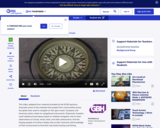
This video segment adapted from 1421: The Year the Chinese Discovered America? introduces the theory that the Chinese discovered America prior to Columbus.
- Subject:
- Humanities
- Grade Level:
- Primary, Secondary
- Collection:
-
Teachers' Domain