Sometime after 1492, the concept of the New World or America came …
Sometime after 1492, the concept of the New World or America came into being, and this concept appeared differently - as an experience or an idea - for different people and in different places. This semester, we will read three groups of texts: first, participant accounts of contact between native Americans and French or English speaking Europeans, both in North America and in the Caribbean and Brazil; second, transformations of these documents into literary works by contemporaries; third, modern texts which take these earlier materials as a point of departure for rethinking the experience and aftermath of contact. The reading will allow us to compare perspectives across time and space, across the cultural geographies of religion, nation and ethnicity, and finally across a range of genres - reports, captivity narratives, essays, novels, poetry, drama, and film. Some of the earlier authors we will read are Michel Montaigne, William Shakespeare, Jean de Léry, Daniel Defoe and Mary Rowlandson; more recent authors include Derek Walcott, and J. M. Coetzee.
By studying paintings from the Cave of Lascaux (France) and the Blombos …
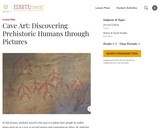
By studying paintings from the Cave of Lascaux (France) and the Blombos Cave (South Africa), students will discover that pictures can be a way of communicating beliefs and ideas and can give us clues today about what life was like long ago.
For the most part recorded on site in places such as Subiaco, …
For the most part recorded on site in places such as Subiaco, Montecassino, Assis, San Casciano, Florence and Rome in June of 2013, the documentary we present here was produced and then broadcasted by the State Television of Portugal on December 24, 2013 (RTP2) and January 2, 2014 (RTP1). The Program was produced for RTP1 by the Journalist Fátima Campos Ferreira and the Reporter of Image Carlos Oliveira under the scientific advice of João J. Vila-Chã, professor for Philosophy at the Pontifical Gregorian University in Rome. The documentary was particularly enriched by the contribution of Professor Joseph Weiler, President of the European University Institute in Florence, and was edited by Alexandre Leandro, chief-editor at the RTP. Originally titled (in Portuguese) «O Triunfo do Espírito», the documentary was conceived as (a rather unusual form of) narrative about (the Idea of) Europe and out of the recognition that for the present as for the future of the world a confront remains unavoidable with the cultural and the religious dimension of the Idea of Europe as we know it through the media of our cultural (and philosophical) history. We are grateful to all the Institutions that in places such as Subiaco, Montecassino, Assis, Florence, San Casciano and Rome allowed the team sent by the RTP to Italy to realize the work as intended and so contributed in a decisive way to this particular (and somehow peculiar) narrative about the Idea of Europe.
This course will conduct a comparative study of the grand strategies of …
This course will conduct a comparative study of the grand strategies of the great powers (Britain, France, Germany and Russia) competing for mastery of Europe from the late nineteenth to the mid-twentieth century. Grand strategy is the collection of political and military means and ends with which a state attempts to achieve security. We will examine strategic developments in the years preceding World Wars I and II, and how those developments played themselves out in these wars. The following questions will guide the inquiry: What is grand strategy and what are its critical aspects? What recurring factors have exerted the greatest influence on the strategies of the states selected for study? How may the quality of a grand strategy be judged? What consequences seem to follow from grand strategies of different types? A second theme of the course is methodological. We will pay close attention to how comparative historical case studies are conducted.
Conflicted Antiquities is a rich cultural history of European and Egyptian interest …
Conflicted Antiquities is a rich cultural history of European and Egyptian interest in ancient Egypt and its material culture, from the early nineteenth century until the mid-twentieth. Consulting the relevant Arabic archives, Elliott Colla demonstrates that the emergence of Egyptology—the study of ancient Egypt and its material legacy—was as consequential for modern Egyptians as it was for Europeans. The values and practices introduced by the new science of archaeology played a key role in the formation of a new colonial regime in Egypt. This fact was not lost on Egyptian nationalists, who challenged colonial archaeologists with the claim that they were the direct heirs of the Pharaohs, and therefore the rightful owners and administrators of ancient Egypt’s historical sites and artifacts. As this dispute developed, nationalists invented the political and expressive culture of “Pharaonism”—Egypt’s response to Europe’s Egyptomania.
In this course the conquest and colonization of the Americas is considered, …
In this course the conquest and colonization of the Americas is considered, with special attention to the struggles of native peoples in Guatemala, Canada, Brazil, Panama, and colonial New England. In two segments of the course-one devoted to the Jesuit missionization of the Huron in the 1630s, the other to struggles between the government of Panama and the Kuna between 1900 and 1925-students examine primary documents such as letters, reports, and court records, to draw their own conclusions. Attention focuses on how we know about and represent past eras and other peoples, as well as on the history of struggles between native Americans and Europeans.
Conversations with History host Harry Kreisler interviews Joseph Joffe, editor/publisher of Die …
Conversations with History host Harry Kreisler interviews Joseph Joffe, editor/publisher of Die Zeit, about the implications of the Bush Doctrine for U.S-European relations. (58 min)
Italian Journalist Federico Rampini joins Conversations host Harry Kreisler for a discussion …
Italian Journalist Federico Rampini joins Conversations host Harry Kreisler for a discussion of Italian politics and the role of globalization in the movement toward the uniting of Europe. (49 min)
Host Harry Kreisler welcomes The Right Honorable Lord Patten of Barnes CH …
Host Harry Kreisler welcomes The Right Honorable Lord Patten of Barnes CH for a discussion of the European UnionŐs common foreign and defense policy, relations between Europe and the United States, and the challenges posed by the emergence of the economies of China and India. Lord Patten also offers his reflections on diplomacy, enlargement, and the power of ideas in politics. (53 min)
UC Berkeley's Harry Kreisler welcomes author and columnist William Pfaff for a …
UC Berkeley's Harry Kreisler welcomes author and columnist William Pfaff for a discussion of U.S. foreign policy, U.S.- European relations and the end of the Cold War. Pfaff reflects on hisĘ intellectual odyssey and comments on the role of the press in shaping U.S.opinion toward world politics. (60 min)
Historian Sir Michael Howard joins Conversations with History host Harry Kreisler for …
Historian Sir Michael Howard joins Conversations with History host Harry Kreisler for a discussion of the changes in Europe with the end of the Cold War. (53 min)
On this episode of Conversations with History, UC Berkeley's Harry Kreisler talks …
On this episode of Conversations with History, UC Berkeley's Harry Kreisler talks with Elizabeth Jones, Assistant Secretary of State for Europe and Eurasia, about U.S. foreign policy and the change after 9/11. (53 min)
Background Scientific research in the 21st century is more data intensive and …
Background Scientific research in the 21st century is more data intensive and collaborative than in the past. It is important to study the data practices of researchers – data accessibility, discovery, re-use, preservation and, particularly, data sharing. Data sharing is a valuable part of the scientific method allowing for verification of results and extending research from prior results. Methodology/Principal Findings A total of 1329 scientists participated in this survey exploring current data sharing practices and perceptions of the barriers and enablers of data sharing. Scientists do not make their data electronically available to others for various reasons, including insufficient time and lack of funding. Most respondents are satisfied with their current processes for the initial and short-term parts of the data or research lifecycle (collecting their research data; searching for, describing or cataloging, analyzing, and short-term storage of their data) but are not satisfied with long-term data preservation. Many organizations do not provide support to their researchers for data management both in the short- and long-term. If certain conditions are met (such as formal citation and sharing reprints) respondents agree they are willing to share their data. There are also significant differences and approaches in data management practices based on primary funding agency, subject discipline, age, work focus, and world region. Conclusions/Significance Barriers to effective data sharing and preservation are deeply rooted in the practices and culture of the research process as well as the researchers themselves. New mandates for data management plans from NSF and other federal agencies and world-wide attention to the need to share and preserve data could lead to changes. Large scale programs, such as the NSF-sponsored DataNET (including projects like DataONE) will both bring attention and resources to the issue and make it easier for scientists to apply sound data management principles.
Major developments in the political, social, and religious history of Western Europe …
Major developments in the political, social, and religious history of Western Europe from the accession of Diocletian to the feudal transformation. Topics include the conversion of Europe to Christianity, the fall of the Roman Empire, the rise of Islam and the Arabs, the "Dark Ages," Charlemagne and the Carolingian renaissance, and the Viking and Hungarian invasions.
This resource is a video abstract of a research paper created by …
This resource is a video abstract of a research paper created by Research Square on behalf of its authors. It provides a synopsis that's easy to understand, and can be used to introduce the topics it covers to students, researchers, and the general public. The video's transcript is also provided in full, with a portion provided below for preview:
"Even though Europe is far from malarial hot spots, doctors there still have to treat travelers who contract the disease while on holiday or business trips. And because Europeans aren’t exposed to malaria on a regular basis, if they do become infected with the parasites, they’re more likely to develop a severe case. To keep tabs on how malaria is treated across 12 European countries, the European Network for Tropical Medicine and Travel Health, or TropNet, regularly collects data. Now, a report on all of its severe malaria cases between 2006 and 2014 offers an unprecedented look at malaria treatment across the continent. Over the 8-year period, epidemiologists counted 185 cases of severe malaria in the network, primarily following visits to West or central Africa. The outcome was good for the vast majority of patients: 98.4 percent survived. But there was a lot of variation in how people were treated. Hospitals used 56 different drug combinations..."
The rest of the transcript, along with a link to the research itself, is available on the resource itself.
This course surveys the social, cultural, and political development of western Europe …
This course surveys the social, cultural, and political development of western Europe between 500 and 1350. A number of topics are incorporated into the broad chronological sweep of the course, including: the Germanic conquest of the ancient Mediterranean world; the rise of a distinct northern culture and the Carolingian Renaissance; the emergence of feudalism and the breakdown of political order; contact with the Byzantine and Islamic East and the Crusading movement; the quality of religious life; the vitality of the high medieval economy and culture; and the catastrophes of the fourteenth century.
Discerning the ethnic and racial dimensions of politics is considered by some …
Discerning the ethnic and racial dimensions of politics is considered by some indispensable to understanding contemporary world politics. This course seeks to answer fundamental questions about racial and ethnic politics. To begin, what are the bases of ethnic and racial identities? What accounts for political mobilization based upon such identities? What are the political claims and goals of such mobilization and is conflict between groups and/or with government forces inevitable? How do ethnic and racial identities intersect with other identities, such as gender and class, which are themselves the sources of social, political, and economic cleavages? Finally, how are domestic ethnic/racial politics connected to international human rights? To answer these questions, the course begins with an introduction to dominant theoretical approaches to racial and ethnic identity. The course then considers these approaches in light of current events in Africa, Asia, Latin America, Europe, and the United States.
Ethnic and racial conflict appear to be the hallmark of the new …
Ethnic and racial conflict appear to be the hallmark of the new world order. What accounts for the rise of ethnic/racial and nationalist sentiments and movements? What is the basis of ethnic and racial identity? What are the political claims and goals of such movements and is conflict inevitable? Introduces students to dominant theoretical approaches to race, ethnicity, and nationalism, and considers them in light of current events in Africa, Europe, and the Americas. Discerning the ethnic and racial dimensions of politics is considered by some indispensable to understanding contemporary world politics. This course seeks to answer fundamental questions about racial and ethnic politics. To begin, what are the bases of ethnic and racial identities? What accounts for political mobilization based upon such identities? What are the political claims and goals of such mobilization and is conflict between groups and/or with government forces inevitable? How do ethnic and racial identities intersect with other identities, such as gender and class, which are themselves the sources of social, political, and economic cleavages? Finally, how are domestic ethnic/racial politics connected to international human rights? To answer these questions, the course begins with an introduction to dominant theoretical approaches to racial and ethnic identity. The course then considers these approaches in light of current events in Africa, Asia, Latin America, Europe, and the United States.
To introduce students to the geography of Europe, the following HyperDoc will …
To introduce students to the geography of Europe, the following HyperDoc will expose students to vocabulary for the Unit, Google Trends searches for the highest trending searches of European countries, Google Voyages to Paris, Rome or London, and a sharing of experiences through Google Classroom (option for FlipGrid).
This activity is designed for independent work with technology. It would be ideal for at least 30 minutes of time. If you do not use Google Classroom, it would be beneficial to embed some other form of sharing/reflection, such as a FlipGrid or Recap prompt.
In the face of renewed competition from Hollywood since the early 1980s …
In the face of renewed competition from Hollywood since the early 1980s and the challenges posed to Europe's national cinemas by the fall of the Wall in 1989, independent filmmaking in Europe has begun to re-invent itself. European Cinema: Face to Face with Hollywood re-assesses the different debates and presents a broader framework for understanding the forces at work since the 1960s. These include the interface of "world cinema" and the rise of Asian cinemas, the importance of the international film festival circuit, the role of television, as well as the changing aesthetics of auteur cinema. New audiences have different allegiances, and new technologies enable networks to reshape identities, but European cinema still has an important function in setting critical and creative agendas, even as its economic and institutional bases are in transition.
No restrictions on your remixing, redistributing, or making derivative works. Give credit to the author, as required.
Your remixing, redistributing, or making derivatives works comes with some restrictions, including how it is shared.
Your redistributing comes with some restrictions. Do not remix or make derivative works.
Most restrictive license type. Prohibits most uses, sharing, and any changes.
Copyrighted materials, available under Fair Use and the TEACH Act for US-based educators, or other custom arrangements. Go to the resource provider to see their individual restrictions.