MOSAIC selects, reviews, and promotes books that authentically and realistically portray the …
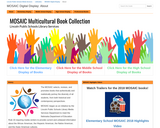
MOSAIC selects, reviews, and promotes books that authentically and realistically portray the diversity of all students, from both historical and contemporary perspectives.
Every resource is reviewed by ESU 18 committee members for accuracy, authenticity, content and perspective, characterization, setting, and literary quality. Only the "best of the best" resources are included in the annual MOSAIC collection.
This OER was made possible through the support of the Academic Senate …
This OER was made possible through the support of the Academic Senate for California Community Colleges Open Educational Resources Initiative (ASCCC OERI). This textbook was developed with the intention to support customizability and allow instructors to adopt and adapt the materials to fit their own course needs through the use of an open license and open resources. Because of this, this textbook can be transferred fully or as chapters (modules). It is meant to be used as you (the instructor) see fit. Alignment to Library Support Staff Certification (LSSC): At the beginning of each module chapter, learning objectives and LSSC competency sets are listed that the content aligns to. This is done to provide further insight into how the material can best support your course. In the appendixes, you will also find perspectives from students and professionals that can be incorporated into your classroom discussions about the profession. These insights were gathered by alumni of LSS certificate programs, advisory board members of LSS programs, and other library community members. This text was also written with the intention to not just highlight EDI efforts and priorities for libraries, but also with EDI practice in mind - meaning, we wanted to use and incorporate resources that provided a diverse range of experiences and perspectives as well. This includes checking for accessibility and usability.
America by the Numbers with Maria Hinojosa, a PBS documentary series produced …
America by the Numbers with Maria Hinojosa, a PBS documentary series produced by the Harlem-based Futuro Media Group, reveals how dramatic changes in the composition and demographics of the United States are playing out across the country.
The American Yawp constructs a coherent and accessible narrative from all the …
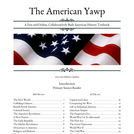
The American Yawp constructs a coherent and accessible narrative from all the best of recent historical scholarship. Without losing sight of politics and power, it incorporates transnational perspectives, integrates diverse voices, recovers narratives of resistance, and explores the complex process of cultural creation. It looks for America in crowded slave cabins, bustling markets, congested tenements, and marbled halls. It navigates between maternity wards, prisons, streets, bars, and boardrooms. Whitman’s America, like ours, cut across the narrow boundaries that strangle many narratives. Balancing academic rigor with popular readability, The American Yawp offers a multi-layered, democratic alternative to the American past.
These activities ask students to engage with the question of what an …
These activities ask students to engage with the question of what an equitable school calendar looks like and how to make their own school calendar more inclusive.
This module introduces students who are already familiar with GIS to doing …
This module introduces students who are already familiar with GIS to doing comparative analyses with large-scale community science (often called citizen science) data sets. Students will explore how we can use community science data to examine the spread and distribution of invasive species in different geographic locations. In the final step, students will identify different invasive species and determine if community science data accurately maps the threat these species pose.
(Note: this resource was added to OER Commons as part of a batch upload of over 2,200 records. If you notice an issue with the quality of the metadata, please let us know by using the 'report' button and we will flag it for consideration.)
This downloadeable resource guide, for instructors and students in introductory astronomy courses, …
This downloadeable resource guide, for instructors and students in introductory astronomy courses, focuses on the contributions to astronomy of African, Asian, Hispanic, South Pacific, Islamic, and Native American cultures. It also contains a section on reports and articles for achieving greater diversity in science. Written by Andrew Fraknoi, the guide is part of a series sponsored by the Heliophysics Forum of the Space Missions Directorate at NASA. It includes written, on-line, and audio-visual materials, which can be used directly in the classroom, for student papers, or for personal enrichment.
In this video, we will take a look at the life and …
In this video, we will take a look at the life and work of Alaskan author, Tricia Brown. This author study would be used to help introduce multicultural literature in the library.
This course for Administrators provides knowledge and skills in supporting diverse families …
This course for Administrators provides knowledge and skills in supporting diverse families and enhancing English Language Development (ELD) across expressive and receptive language domains for school-age children who are English Language Learners (ELL) or have other learning and language barriers. Administrators learn about key standards and best practices and explore strategies to implement improved practice, creating a shift in policies and programmatic culture to embrace and support diverse learners, welcoming non-native English speaking families and enhancing the ELD progress of students who are learners of English.
During this lesson, students will reflect on the ways they have experienced …
During this lesson, students will reflect on the ways they have experienced or participated in bias based on physical size and appearance—and will discuss how society’s expectations about body image and appearance affect people. Students build on their media literacy skills as they examine media images for messages that consciously and unconsciously affect attitudes and behaviors toward others. Finally, the class will explore ways to get beyond appearance as a dominant force in their social lives.Note: This lesson has been adapted with permission from the original created by GLSEN for its program, No Name-Calling Week.
Inklusion zielt auf das Ermöglichen von Bildungsgerechtigkeit und bedeutet Barrieren der Teilhabe …
Inklusion zielt auf das Ermöglichen von Bildungsgerechtigkeit und bedeutet Barrieren der Teilhabe abzubauen und Vielfalt wertzuschätzen. Die hier zur Verfügung gestellte Auflistung bietet in dem Zusammenhang einen Überblick über bestehende Materialien zur Thematik für die Anregung einer inklusiven Pädagogik in Kindertageseinrichtungen.
This resource is a video abstract of a research paper created by …
This resource is a video abstract of a research paper created by Research Square on behalf of its authors. It provides a synopsis that's easy to understand, and can be used to introduce the topics it covers to students, researchers, and the general public. The video's transcript is also provided in full, with a portion provided below for preview:
"Next-generation sequencing (NGS) studies have led to dramatic improvements in our understanding of human microbiomes. However, this method is based on the presence of DNA and cannot distinguish between living and dead microbes on its own. Environments like our skin are hostile and have high microbe turnover, which leads to significant amounts of DNA from dead microbes, which can lead to inaccurate community estimations in NGS studies. To overcome this, researchers tested the feasibility of pre-treatment with Benzonase to digest unprotected DNA. They used both mock bacterial communities and skin microbiome samples with inactivated bacteria or bacteria-free DNA spiked-in. Benzonase (BDA) pre-treatment reduced the levels of DNA from dead bacteria in both mock and natural communities. It also reduced the amount of host DNA in samples with high human-to-microbial DNA ratios without obvious impact on the microbial profile..."
The rest of the transcript, along with a link to the research itself, is available on the resource itself.
In this second of three lessons on the film ‘Bibi,’ students will …
In this second of three lessons on the film ‘Bibi,’ students will apply the concepts of intersectionality, privilege and oppression to characters from the film.
In this second of three lessons on the film ‘Bibi,’ students will …
In this second of three lessons on the film ‘Bibi,’ students will apply the concepts of intersectionality, privilege and oppression to characters from the film ‘Bibi.’
In this third and final lesson on the film ‘Bibi,’ students will …
In this third and final lesson on the film ‘Bibi,’ students will write a letter to Ernesto explaining the concepts of intersectionality, privilege and oppression.
This exercise contains two interrelated modules that introduce students to modern biological …
This exercise contains two interrelated modules that introduce students to modern biological techniques in the area of Bioinformatics, which is the application of computer technology to the management of biological information. The need for Bioinformatics has arisen from the recent explosion of publicly available genomic information, such as that resulting from the Human Genome Project.
This resource is a video abstract of a research paper created by …
This resource is a video abstract of a research paper created by Research Square on behalf of its authors. It provides a synopsis that's easy to understand, and can be used to introduce the topics it covers to students, researchers, and the general public. The video's transcript is also provided in full, with a portion provided below for preview:
"Birds can carry and transmit viruses to humans and other animals. Thus, understanding the viral community hosted by birds could help us predict future outbreaks of human disease. A recent metagenomics study took a broad look at the viruses found in the gut of wild and captive birds. The dataset included samples from over 3,000 birds that represented over 87 species and 10 different phylogenetic orders and the researchers characterized genomes from numerous viral families including astroviruses, coronaviruses, parvoviruses, and adenoviruses. Examining trends, they found that wild birds had higher viral diversity than captive birds. There was also evidence of potential cross-species transmission between wild birds and domestic poultry. Further analysis of the viral genomic sequences revealed differences in virus distribution patterns between wild and captive birds. Different phylogenetic orders of birds and geographic sites also had distinct distribution patterns..."
The rest of the transcript, along with a link to the research itself, is available on the resource itself.
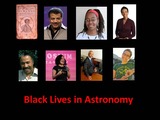
This focused resource guide, "Black Lives in Astronomy," includes specific written and …
This focused resource guide, "Black Lives in Astronomy," includes specific written and video resources about and by 25 black astronomers, as well as general materials to examine the history and issues facing black members of the astronomical community. It includes both older, established scientists and people early in their careers. It is aimed at the Astro 101 and amateur astronomer level, and thus does not include any technical materials. I hope this resource will give instructors and students examples of authentic black voices that can be shown in class or used in assignments.
No restrictions on your remixing, redistributing, or making derivative works. Give credit to the author, as required.
Your remixing, redistributing, or making derivatives works comes with some restrictions, including how it is shared.
Your redistributing comes with some restrictions. Do not remix or make derivative works.
Most restrictive license type. Prohibits most uses, sharing, and any changes.
Copyrighted materials, available under Fair Use and the TEACH Act for US-based educators, or other custom arrangements. Go to the resource provider to see their individual restrictions.