Introduction to the linguistic study of language pathology, concentrating on experimental approaches …
Introduction to the linguistic study of language pathology, concentrating on experimental approaches and theoretical explanations. Discussion of Specific Language Impairment, autism, Down syndrome, Williams syndrome, normal aging, Parkinson's disease, Alzheimer's disease, hemispherectomy and aphasia. Focuses on the comparison of linguistic abilities among these syndromes, while drawing clear comparisons with first and second language acquisition. Topics include the lexicon, morphology, syntax, semantics and pragmatics. Relates the lost linguistic abilities in these syndromes to properties of the brain.
This course is a graduate introduction to natural language processing - the …
This course is a graduate introduction to natural language processing - the study of human language from a computational perspective. It covers syntactic, semantic and discourse processing models, emphasizing machine learning or corpus-based methods and algorithms. It also covers applications of these methods and models in syntactic parsing, information extraction, statistical machine translation, dialogue systems, and summarization. The subject qualifies as an Artificial Intelligence and Applications concentration subject.
Aswaat Arabiyya is an archive of 245 videos in Arabic, listed by …
Aswaat Arabiyya is an archive of 245 videos in Arabic, listed by difficulty level and accompanied by glossaries and four worksheets each that focus on every aspect of listening comprehension. Selections come largely from Arabic media, with some cultural presentations by native speakers. Videos cover the entire Arabic-speaking world and include MSA and different dialects. Materials are designed to be used both as in-class activities and homework assignments. Videos can be slowed down.
Together with 21G.103 Chinese III, this course forms the intermediate level of …
Together with 21G.103 Chinese III, this course forms the intermediate level of what constitutes a four-term foundation in Mandarin. Upon completion of Chinese III and IV, students should be able to speak Chinese with fluency on everyday topics, reach a literacy level of 750 characters (approximately 1200 common words written in both traditional and simplified characters), read materials written in simple standard written Chinese, and produce both orally and in writing short compositions on everyday topics. Throughout the course we will address issues of how cultural differences inform and are informed by different linguistic contexts and practices.
This course is the continuation of 21G.105. It is designed to further …
This course is the continuation of 21G.105. It is designed to further help students develop sophisticated conversational, reading and writing skills by combining traditional textbook material with their own explorations of Chinese speaking societies, using the human, literary, and electronic resources available at MIT and in the Boston area. Some special features of Chinese society, its culture, its customs and habits, its history, and the psychology of its people are introduced. The class consists of reading, discussion, composition, network exploration, and conversational practice. The course is conducted in Mandarin.
The Three Little Pigs is told orally with pictures only and the …
The Three Little Pigs is told orally with pictures only and the children are asked to make predictions based on text features. At the end, the children are asked to compare the houses from the story to where they live. The children will enjoy a puppet show of the Three Little Pigs. Teachers can use this video to teach a sequence of events and story elements.
FreeReading is an open source instructional program that helps educators teach early …
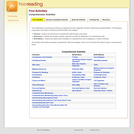
FreeReading is an open source instructional program that helps educators teach early literacy. Because it is open source, it represents the collective wisdom of a wide community of teachers and researchers. FreeReading contains Comprehension Activities, a page of activities to address important comprehension skills and strategies.
This class explores interaction with mobile computing systems and telephones by voice, …
This class explores interaction with mobile computing systems and telephones by voice, including speech synthesis, recognition, digital recording, and browsing recorded speech. Emphasis on human interface design issues and interaction techniques appropriate for cognitive requirements of speech. Topics include human speech production and perception, speech recognition and text-to-speech algorithms, telephone networks, and spatial and time-compressed listening. Extensive reading from current research literature.
In this Unit Plan, Students will use Book Creator to create a …
In this Unit Plan, Students will use Book Creator to create a comic of the story they have independently read in class. Students will independently use the resource I generated on how to use each function to create their comic. Then use the Criteria for Success ( cfs) to evaluate their own work, and share their work to peers.
Module 11 of the 16-module ESL course explores the importance and relevance …
Module 11 of the 16-module ESL course explores the importance and relevance of law in the community. The lessons consist of critical thinking discussions on laws and scenarios dealing with the absence of laws. Conditionals are practiced as the grammar component. Reading and comprehension is on Veterans Day.
The 11th grade learning experience consists of 7 mostly month-long units aligned …
The 11th grade learning experience consists of 7 mostly month-long units aligned to the Common Core State Standards, with available course material for teachers and students easily accessible online. Over the course of the year there is a steady progression in text complexity levels, sophistication of writing tasks, speaking and listening activities, and increased opportunities for independent and collaborative work. Rubrics and student models accompany many writing assignments.Throughout the 11th grade year, in addition to the Common Read texts that the whole class reads together, students each select an Independent Reading book and engage with peers in group Book Talks. Students move from learning the class rituals and routines and genre features of argument writing in Unit 11.1 to learning about narrative and informational genres in Unit 11.2: The American Short Story. Teacher resources provide additional materials to support each unit.
The 12th grade learning experience consists of 7 mostly month-long units aligned …
The 12th grade learning experience consists of 7 mostly month-long units aligned to the Common Core State Standards, with available course material for teachers and students easily accessible online. Over the course of the year there is a steady progression in text complexity levels, sophistication of writing tasks, speaking and listening activities, and increased opportunities for independent and collaborative work. Rubrics and student models accompany many writing assignments.Throughout the 12th grade year, in addition to the Common Read texts that the whole class reads together, students each select an Independent Reading book and engage with peers in group Book Talks. Language study is embedded in every 12th grade unit as students use annotation to closely review aspects of each text. Teacher resources provide additional materials to support each unit.
"Homeless," by Anna Quindlen, allows the student to understand homelessness as it …
"Homeless," by Anna Quindlen, allows the student to understand homelessness as it affects many people on a broader scale. She emphasizes the individuality of homelessness, the fact that they not only lack possessions but have no place to keep them."The First" (also titled "Eviction") is a short poem by Lucille Clifton that provides the opportunity to compare and contrast the approach to the same issue through another genre.In "The Glass Castle" by Jeannette Walls the parents choose to live as homeless students. Students will compare and contrast the Walls' view of homelessness with Quindlen's and Clifton's.Final Assessment: How do Anna Quindlen and Lucille Clifton use language to convince the reader that their arguments have value? (focus on use of specific language, word choice, mood, tone, etc.) Would Walls agree?
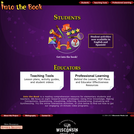
The "Into the Book" web site is designed to help elementary students …
The "Into the Book" web site is designed to help elementary students practice eight reading comprehension strategies through playful interactive activities. The site focuses on eight research-based strategies: Using Prior Knowledge, Making Connections, Questioning, Visualizing, Inferring, Summarizing, Evaluating and Synthesizing. "Behind the Lesson," the teacher area of the site, provides information, lesson plans and other resources for teachers.
No restrictions on your remixing, redistributing, or making derivative works. Give credit to the author, as required.
Your remixing, redistributing, or making derivatives works comes with some restrictions, including how it is shared.
Your redistributing comes with some restrictions. Do not remix or make derivative works.
Most restrictive license type. Prohibits most uses, sharing, and any changes.
Copyrighted materials, available under Fair Use and the TEACH Act for US-based educators, or other custom arrangements. Go to the resource provider to see their individual restrictions.