Students learn what causes air pollution and how to investigate the different …
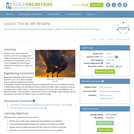
Students learn what causes air pollution and how to investigate the different pollutants that exist, such as toxic gases and particulate matter. They investigate the technologies developed by engineers to reduce air pollution.
In this unit, students explore the various roles of environmental engineers, including: …
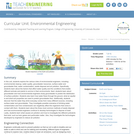
In this unit, students explore the various roles of environmental engineers, including: environmental cleanup, water quality, groundwater resources, surface water and groundwater flow, water contamination, waste disposal and air pollution. Specifically, students learn about the factors that affect water quality and the conditions that enable different animals and plants to survive in their environments. Next, students learn about groundwater and how environmental engineers study groundwater to predict the distribution of surface pollution. Students also learn how water flows through the ground, what an aquifer is and what soil properties are used to predict groundwater flow. Additionally, students discover that the water they drink everyday comes from many different sources, including surface water and groundwater. They investigate possible scenarios of drinking water contamination and how contaminants can negatively affect the organisms that come in contact with them. Students learn about the three most common methods of waste disposal and how environmental engineers continue to develop technologies to dispose of trash. Lastly, students learn what causes air pollution and how to investigate the different pollutants that exist, such as toxic gases and particulate matter. Also, they investigate the technologies developed by engineers to reduce air pollution.
No restrictions on your remixing, redistributing, or making derivative works. Give credit to the author, as required.
Your remixing, redistributing, or making derivatives works comes with some restrictions, including how it is shared.
Your redistributing comes with some restrictions. Do not remix or make derivative works.
Most restrictive license type. Prohibits most uses, sharing, and any changes.
Copyrighted materials, available under Fair Use and the TEACH Act for US-based educators, or other custom arrangements. Go to the resource provider to see their individual restrictions.