Verbal or non-verbal acknowledgement should be used frequently to recognise students demonstrating …
Verbal or non-verbal acknowledgement should be used frequently to recognise students demonstrating expected behaviours. Praise emphasises the effort students have made to exceed behaviour expectations specific to them.
Several assignments are used for this course, including writing lesson plans, writing …
Several assignments are used for this course, including writing lesson plans, writing a unit plan, creating supplemental items for the unit plan, and designing a classroom management plan. In my course, I assign two units with three lesson plans included in each unit. This is designed for Early Childhood, but it can be edited for secondary.
Some students misbehave because they are trying to attract teacher attention. Surprisingly, …
Some students misbehave because they are trying to attract teacher attention. Surprisingly, many students who value adult attention don't really care if it is positive (praise) or negative attention (reprimands)--they just want attention! Unfortunately, instructors with students who thrive on teacher attention can easily fall into a 'reprimand trap.' The scenario might unfold much like this: First, the student misbehaves. Then the teacher approaches the student and reprimands him or her for misbehaving. Because the student finds the negative teacher attention to be reinforcing, he or she continues to misbehave-and the teacher naturally responds by reprimanding the student more often! An escalating, predictable cycle is established, with the student repeatedly acting-out and teacher reprimanding him or her. Teachers can break out of this cycle, though, by using 'random positive attention' with students. Essentially, the instructor starts to ignore student attention-seeking behaviors, while at the same time 'randomly' giving the student positive attention. That is, the student receives regular positive teacher attention but at times unconnected to misbehavior. So the student still gets the adult attention that he or she craves. More importantly, the link between student misbehavior and resulting negative teacher attention is broken.
Motivating a reluctant student to complete schoolwork is not easy. In a …
Motivating a reluctant student to complete schoolwork is not easy. In a typical classroom, students can choose from a number of sources of potential reinforcement (Billington & DiTommaso, 2003)--and academic tasks often take a back seat to competing behaviors such as talking with peers. One way that teachers can increase the attractiveness of schoolwork is by structuring lessons or assignments around topics or activities of high interest to the student (Miller et al., 2003).In fact, with planning, the teacher can set up a 'trap' that uses motivating elements to capture a student's attention to complete academic tasks (Alber & Heward, 1996). Here is a 6-step blue-print for building an academic 'motivation trap' (adapted from Alber & Heward, 1996).
Students can sometimes have emotional outbursts in school settings. This fact will …
Students can sometimes have emotional outbursts in school settings. This fact will not surprise many teachers, who have had repeated experience in responding to serious classroom episodes of student agitation. Such outbursts can be attributed in part to the relatively high incidence of mental health issues among children and youth. It is estimated, for example, that at least one in five students in American schools will experience a mental health disorder by adolescence (U.S. Department of Health and Human Services, 1999). But even students not identified as having behavioral or emotional disorders may occasionally have episodes of agitation triggered by situational factors such as peer bullying, frustration over poor academic performance, stressful family relationships, or perceived mistreatment by educators.
Circulation is a skill that supports and maintains positive student behaviour. Intentional …
Circulation is a skill that supports and maintains positive student behaviour. Intentional circulation is systematically moving around the classroom and standing in key places to observe and actively interact with students.
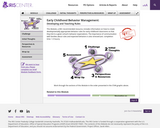
This Module—a revision of Who's In Charge? Developing a Comprehensive Behavior Management …
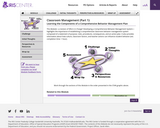
This Module—a revision of Who's In Charge? Developing a Comprehensive Behavior Management System—highlights the importance of establishing a comprehensive classroom behavior management system composed of a statement of purpose, rules, procedures, consequences, and an action plan. It also provides information about how culture, classroom factors, and teacher actions can influence student behavior (est. completion time: 1 hour).
This Module—a revision of You're in Charge! Developing Your Own Comprehensive Behavior …
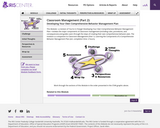
This Module—a revision of You're in Charge! Developing Your Own Comprehensive Behavior Management Plan—reviews the major components of classroom management (including rules, procedures, and consequences) and guides users through the steps of creating their own comprehensive behavior plan. The module is a companion to Classroom Management (Part 1): Learning the Components of a Comprehensive Behavior Management Plan (est. completion time: 2 hours).
The Australian Education Research Organisation (AERO) has developed a suite of foundational …
The Australian Education Research Organisation (AERO) has developed a suite of foundational resources for beginning teachers, teachers working in new environments, or experienced teachers who want to refine or refresh specific elements of their classroom management practice. They can be used to individually reflect on and refine one’s own practice, or as shared resources to support mentoring and other collaborative and whole-school approaches to improving classroom management. This user guide explains the resources and provides suggestions for their use.
Clear communication is a skill that supports and maintains positive student behaviour. …
Clear communication is a skill that supports and maintains positive student behaviour. Clear communication is the use of clear and concise language to set expectations, give instructions and address and correct behaviour. It models positive classroom talk that supports students to understand and do what is expected of them, whilst also supporting a positive classroom culture.
Deliberately pausing is a skill that supports and maintains positive student behaviour. …
Deliberately pausing is a skill that supports and maintains positive student behaviour. A deliberate pause breaks the flow of verbal communication to gain students’ attention, emphasise a point, or give students’ time to process information, follow a direction or correct disengaged or disruptive behaviours.
he teacher's most important objective when faced with a defiant or non-compliant …
he teacher's most important objective when faced with a defiant or non-compliant student is to remain outwardly calm. Educators who react to defiant behavior by becoming visibly angry, raising their voices, or attempting to intimidate the student may actually succeed only in making the student's oppositional behavior worse! While the strategies listed here may calm an oppositional student, their main purpose is to help the teacher to keep his or her cool. Remember: any conflict requires at least two people. A power struggle can be avoided if the instructor does not choose to take part in that struggle.
Galeet Cohen, 10th Grade Language Arts teacher at Central High in Pennsylvania, …
Galeet Cohen, 10th Grade Language Arts teacher at Central High in Pennsylvania, believes that adding humor to her interaction is essential. Galeet reminds us that teachers and students spend long days in classrooms, and humor can make it a good time.Ms. Cohen also uses humor to let students know she is aware of what they are doing and prefers her humor approach to strict rules or detention. She shares that sometimes students are "just testing you" and you can easily diffuse a situation calmly and with humor.
This Module, a DEC-recommended resource, includes information on how to create developmentally …
This Module, a DEC-recommended resource, includes information on how to create developmentally appropriate behavior rules for early childhood classrooms so that they link to a given school's behavior expectations. The importance of communication with families about rules and expected behaviors is also stressed (est. completion time: 1.5 hours).
This module is designed for pre-service teachers in the undergraduate PreK- 4 Early …
This module is designed for pre-service teachers in the undergraduate PreK- 4 Early Childhood Education major. The material in the unit will familiarize the future teacher to develop lesson plans and units in both the direct and indirect teaching models. Wonder Spaces, using the Reggio-inspired philosophy, is introduced to design spaces for learners ages 0 - 5. Classroom management is also included.
This course is designed to prepare you for a successful student teaching …
This course is designed to prepare you for a successful student teaching experience. Some of the major themes and activities are: analysis of yourself as a teacher and as a learner, subject knowledge, adolescent development, student learning styles, lesson planning, assessment strategies, classroom management techniques and differentiated instruction. The course requires significant personal involvement and time. You will observe high school classes, begin to pursue a more active role in the classroom in the latter part of the semester, do reflective writings on what you see and think (journal), design and teach a mini-lesson, design a major curriculum unit and engage in our classroom discussions and activities.
As classroom managers, teachers regularly use commands to direct students to start …
As classroom managers, teachers regularly use commands to direct students to start and stop activities. Instructors find commands to be a crucial tool for classroom management, serving as instructional signals that help students to conform to the teacher's expectations for appropriate behaviors.
Module OverviewAs we begin to delve into all things teaching, it's good …
Module OverviewAs we begin to delve into all things teaching, it's good to start with a look at what makes a teacher an effective one. Though the Art of Teaching comes more naturally to some more than others, all teachers who are effective exhibit key teaching behaviors and understand their students.
No restrictions on your remixing, redistributing, or making derivative works. Give credit to the author, as required.
Your remixing, redistributing, or making derivatives works comes with some restrictions, including how it is shared.
Your redistributing comes with some restrictions. Do not remix or make derivative works.
Most restrictive license type. Prohibits most uses, sharing, and any changes.
Copyrighted materials, available under Fair Use and the TEACH Act for US-based educators, or other custom arrangements. Go to the resource provider to see their individual restrictions.