In this lesson students learn about the Reconstruction Amendments (13th, 14th and …
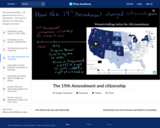
In this lesson students learn about the Reconstruction Amendments (13th, 14th and 15th) that abolished slavery, guaranteed African American citizenship and secured men the right to vote.
Created by NHPRC Teacher Participant/Creator Kenneth Porter for his Senior Leadership class. …
Created by NHPRC Teacher Participant/Creator Kenneth Porter for his Senior Leadership class. We all have different stories, reasons and various paths that we personally took or our relatives traversed to arrive at this nation of ours. This assignment tasks the student with researching the story of a relative/guardian who emigrated to this country. The student will learn the when, the what, the why and the how behind their story, in order to reveal to the student more about their own story.
Organized around the compelling question "How have Asian Americans and Pacific Islanders …
Organized around the compelling question "How have Asian Americans and Pacific Islanders engaged civically and contributed to U.S. culture?" and grounded in inquiry-based teaching and learning, this lesson brings history, civics, and the arts together to learn about the experiences and perspectives of Asian Americans and Pacific Islanders (AAPI) in U.S. history. Primary sources, literature, and works of art created by AAPI individuals and related organizations provide an historical as well as contemporary context for concepts and issues including civic participation, immigration, and culture.
CITOYEN.NE.S is a French language method for the conversation class at the …
CITOYEN.NE.S is a French language method for the conversation class at the intermediate/ advanced level. Content and activities are built around the concepts of diversity, inclusivity and equity, and engage students to practice French while questioning and participating in the world they live in – to be full citizens whatever their background, their race or their gender identity. As the French spelling of the title indicates, the book embraces écriture inclusive and uses it for instructions and general information for all students.
SYNOPSIS: In this lesson, students learn about climate change, calculate their carbon …
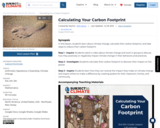
SYNOPSIS: In this lesson, students learn about climate change, calculate their carbon footprint, and take steps to reduce their carbon footprint.
SCIENTIST NOTES: After introducing students to climate change, this lesson immediately makes the climate crisis personal, challenging them to analyze how their behavior affects the climate. Excellent video resources from National Geographic and Rutgers are presented that explain the climate crisis and how it impacts New Jersey and provide actionable steps to conserve energy and mitigate climate change. Individuals are tasked with calculating their climate footprint and then creating a weeklong journal that aids them in discovering ways to reduce carbon emissions. These journals provide students with practice constructing and then solving their own word problems before comparing their results with other students. Finally, groups create posters that demonstrate how they can affect change in their community. This lesson plan is well-sourced, offers multiple opportunities for collaborative learning, and is recommended for teaching.
POSITIVES: -This lesson includes hands-on activities that relate to students’ daily lives and the real world. -Materials are easily accessible for teachers without much planning. -The lesson is intended for students to be reflective, creative, cooperative, and innovative.
ADDITIONAL PREREQUISITES: -Teachers should have a basic understanding of climate change. -Students should understand cooperative learning essentials, including how to be a good teammate and how to work in groups.
DIFFERENTIATION: -Two carbon footprint calculator options are provided. Students can use one or both. -Children’s literature can be used to support English Language Learners or provide supplements for enrichment. Possible books include: -The Tantrum that Saved the World by Megan Herbert and Michael E. Mann -Winston of Churchill: One Bear’s Battle Against Global Warming by Jean Davies Okimoto -The Magic School Bus and the Climate Challenge by Joanna Cole -What Is Climate Change? by Gail Herman -It’s Your World: Get Informed, Get Inspired, & Get Going by Chelsea Clinton -The Last Wild by Piers Torday -Our House Is on Fire by Jeanette Winter -Saving Earth Climate Change and the Fight for Our Future by Olugbemisola Rhuday-Perkovich -Additional resources for enrichment can be found at NOAA.gov and EnergyStar.gov.
SYNOPSIS: This lesson builds on students’ understanding of the cardiorespiratory system, showcases …
SYNOPSIS: This lesson builds on students’ understanding of the cardiorespiratory system, showcases how climate change impacts cardiorespiratory health, and concludes with students exploring ways they can expand their actionable responses to climate change.
SCIENTIST NOTES: This lesson teaches students about what is in the air we breathe, how trees are important to keeping the air clean, air pollution, and how to solve some of the big global problems. Links to local New Jersey organizations are provided. The TedEd video also links to more resources about air pollution. This lesson also includes some movement and a game to help students visualize how pollutants can be removed for the air. The videos contain accurate and thought-provoking information. This resource is recommended for teaching.
POSITIVES: -This lesson incorporates play and fun into learning about air quality and how it relates to the cardiorespiratory system. -Students will draw direct connections between health and climate.
ADDITIONAL PREREQUISITES: -Teachers should have access to a play space large enough to accommodate the “Catch Your Breath Game." -Teachers should have access to balls or objects that students can throw or catch. -Teachers should be familiar with facilitating a Socratic seminar style discussion.
DIFFERENTIATION: -Students can write an analysis on why they think the game is called “Catch Your Breath.” -Teachers can assign the groups to strategically place students who need support in certain areas with students who can provide that support. -Teachers can print out the cardiorespiratory system diagram for students who would benefit from a hard copy. -Other resources related to this lesson include this video about a nonprofit detecting deforestation and this resource to determine the tree equity score of your city or neighborhood.
In this lesson, students will learn about the Los Angeles Chinatown Massacre …
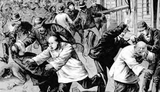
In this lesson, students will learn about the Los Angeles Chinatown Massacre of 1871. They will examine the attitudes and policies of the time which led to the Massacre. Students will learn about recent acts of anti-Asian violence and make connections between the Chinese Massacre and recent anti-Asian violence and attacks.
2021 Social Science Standards Integrated with Ethnic Studies: Civics and Government: 3.2 Economics: 4.4 Historical Knowledge: 5.22 Historical Thinking: 4.19, 5.24 Social Science Analysis: 3.17, 3.18, 4.21, 4.24, 5.27, 5.28, 5.29
In this lesson, students will learn about the Los Angeles Chinese Massacre …
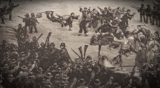
In this lesson, students will learn about the Los Angeles Chinese Massacre of 1871, and identify the causes by examining the attitudes and policies of the time. They will learn about and analyze other massacres that have occurred in the United States in order to gain a better and more nuanced understanding of how and why these acts of violence occur. Lastly, students will research the process for reparations and consider how to address and rectify the harm of such injustices.
This course's aims are two-fold: to offer students the theoretical and practical …
This course's aims are two-fold:
to offer students the theoretical and practical tools to understand how and why cities become torn by ethnic, religious, racial, nationalist, and/or other forms of identity that end up leading to conflict, violence, inequality, and social injustice; and to use this knowledge and insight in the search for solutions
As preparation, students will be required to become familiar with social and political theories of the city and the nation and their relationship to each other. They also will focus on the ways that racial, ethnic, religious, nationalist or other identities grow and manifest themselves in cities or other territorial levels of determination (including the regional or transnational). In the search for remedies, students will be encouraged to consider a variety of policymaking or design points of entry, ranging from the political- institutional (e.g. forms of democratic participation and citizenship) to spatial, infrastructural, and technological interventions.
Citizen participation is everywhere. Invoking it has become de rigueur when discussing …
Citizen participation is everywhere. Invoking it has become de rigueur when discussing cities and regions in the developing world. From the World Bank to the World Social Forum, the virtues of participation are extolled: From its capacity to "deepen democracy" to its ability to improve governance, there is no shortage to the benefits it can bring. While it is clear that participation cannot possibly "do" all that is claimed, it is also clear that citizen participation cannot be dismissed, and that there must be something to it. Figuring out what that something is — whether it is identifying the types of participation or the contexts in which it happens that bring about desirable outcomes — is the goal of the class.
A Project Based Learning Outline for Citizenship and Martin Luther King Jr. …
A Project Based Learning Outline for Citizenship and Martin Luther King Jr. Day. To be used with Kindergarten, 1st or 2nd Grade, as fitted with standards.
Not all people are born equal or free but there is an …
Not all people are born equal or free but there is an expectation of both when you are a citizen of the United States. Our struggles to earn the base level of representation are quickly forgotten as we look for another group to demonize. In my unit we will discover why George Washington was ahead of his time with his warning about "factions" and how their existence makes freedom and equality harder to bridge. As we trek through time highlighting issues such as the abolition of slavery, support for women's suffrage, and the challenges that face Asian and LGBTQIA communities my hope is that student understand the sacrifices made to be accepted and to earn the right to vote but more importantly the difficulty in being welcomed into American society.
The “Citizenship Complex” is the process by which groups gain full inclusion. To understand it, one must look to the intersection of law, citizenship and the Constitution. The unit aims to provide a more complex history of our nation, to tell a more earnest story of how the American identity became a mosaic of human struggle, and to offer a more robust and enlightening study of these issues so that as students recognize the power of citizenship they will take a more hopeful view of what our nation will look like in the future. By engaging in the sophisticated discussions of the past, identifying why some groups supported each other and scapegoated others, and learning about the importance of supporting efforts at inclusion, our students should become more informed, open-minded, and ready for the globalized world of the 21 st Century.
The unit will focus on four groups that have experienced the “Citizenship Complex”: African-American slaves, women, Asian immigrants, and the LGBTQIA community. By comparing these groups over time, we will really be able to unearth the cycles behind the Citizenship Complex and understand that American citizenship means at different times in our country’s history.
The unit will teach elements of civics and democracy through the lens …
The unit will teach elements of civics and democracy through the lens of the Presidential election. Students will be asked to research, read, and write about various aspects of civics and democracy, using a wide array of multimedia resources that will include (but not be limited to) literature, music, visual arts, and technology. The goal of the unit is to help students understand the importance of voting and participation while building their knowledge of the election system. The unit will encourage your students to think about government in a new way and connect this remarkable election to their day to day lives. While this unit will be taught during the first marking period, the unit will work at any point throughout the next few years. It is a Social Studies based unit designed for middle school students, primarily in the sixth grade, but can be modified and adapted to fit high school curriculum, grades nine through twelve.
This curriculum unit focuses on children as citizens, and how they can …
This curriculum unit focuses on children as citizens, and how they can claim ownership of their citizenship. Overall the unit works its way through the rights that children have as citizens and how they can use them to their advantage. It starts with what it means to them to be citizens, two specific rights that they have, and finally how they will use those rights to better their lives. The two rights that we discuss in this unit are education and voting. Those rights are the focus of this unit because I believe that they are the most important to young children and that they will benefit them the most in the long term. Education will provide the foundation for all of their learning throughout their lives, and voting is something that education prepares them for and will later in life affect their community and potentially the nation. I also believe that having an understanding of how voting actually impacts this country could potentially interest them in being active politically in the future.
No restrictions on your remixing, redistributing, or making derivative works. Give credit to the author, as required.
Your remixing, redistributing, or making derivatives works comes with some restrictions, including how it is shared.
Your redistributing comes with some restrictions. Do not remix or make derivative works.
Most restrictive license type. Prohibits most uses, sharing, and any changes.
Copyrighted materials, available under Fair Use and the TEACH Act for US-based educators, or other custom arrangements. Go to the resource provider to see their individual restrictions.