Biology is designed for multi-semester biology courses for science majors. It is …
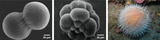
Biology is designed for multi-semester biology courses for science majors. It is grounded on an evolutionary basis and includes exciting features that highlight careers in the biological sciences and everyday applications of the concepts at hand. To meet the needs of today’s instructors and students, some content has been strategically condensed while maintaining the overall scope and coverage of traditional texts for this course. Instructors can customize the book, adapting it to the approach that works best in their classroom. Biology also includes an innovative art program that incorporates critical thinking and clicker questions to help students understand—and apply—key concepts.
By the end of this section, you will be able to:Describe the …
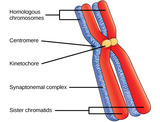
By the end of this section, you will be able to:Describe the behavior of chromosomes during meiosisDescribe cellular events during meiosisExplain the differences between meiosis and mitosisExplain the mechanisms within meiosis that generate genetic variation among the products of meiosis
By the end of this section, you will be able to:Describe the …
By the end of this section, you will be able to:Describe the behavior of chromosomes during meiosisDescribe cellular events during meiosisExplain the differences between meiosis and mitosisExplain the mechanisms within meiosis that generate genetic variation among the products of meiosis
By the end of this section, you will be able to:Describe the …
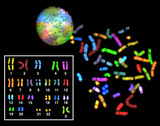
By the end of this section, you will be able to:Describe the structure of prokaryotic and eukaryotic genomesDistinguish between chromosomes, genes, and traitsDescribe the mechanisms of chromosome compaction
By the end of this section, you will be able to:Describe the …
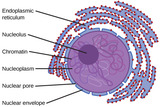
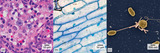
By the end of this section, you will be able to:Describe the structure of eukaryotic cellsCompare animal cells with plant cellsState the role of the plasma membraneSummarize the functions of the major cell organelles
This resource is a video abstract of a research paper created by …
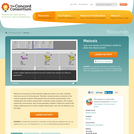
This resource is a video abstract of a research paper created by Research Square on behalf of its authors. It provides a synopsis that's easy to understand, and can be used to introduce the topics it covers to students, researchers, and the general public. The video's transcript is also provided in full, with a portion provided below for preview:
"Critical defects that compromise the nucleus during cell division could be the basis for the age-accelerating effects of people living with progeria. Hutchinson-Gilford progeria syndrome is a genetic disorder that causes premature aging. Affecting one in 8 million newborns worldwide, the disorder is extremely rare—and fatal. The rapid aging of the cardiovascular system causes death due to heart attack or stroke in patients by their mid-teens. Progeria is caused by a tiny point mutation in the lamin A gene. This gene is responsible for producing structural proteins called lamins, which form the scaffolding that holds the cell nucleus together. The mutated form of prelamin A called progerin destabilizes the cell nucleus—the genetic control center of cells. The result is the fast-aging effects observed in progeria. But the link from gene mutation to physical disorder has remained a mystery. Previous studies have looked only at models of progeria, not at actual patient cells..."
The rest of the transcript, along with a link to the research itself, is available on the resource itself.
Students reinforce their knowledge that DNA is the genetic material for all …
Students reinforce their knowledge that DNA is the genetic material for all living things by modeling it using toothpicks and gumdrops that represent the four biochemicals (adenine, thiamine, guanine, and cytosine) that pair with each other in a specific pattern, making a double helix. They investigate specific DNA sequences that code for certain physical characteristics such as eye and hair color. Student teams trade DNA "strands" and de-code the genetic sequences to determine the physical characteristics (phenotype) displayed by the strands (genotype) from other groups. Students extend their knowledge to learn about DNA fingerprinting and recognizing DNA alterations that may result in genetic disorders.
Meiosis is the process by which gametes (eggs and sperm) are made. …
Meiosis is the process by which gametes (eggs and sperm) are made. Gametes have only one set of chromosomes. Therefore, meiosis involves a reduction in the amount of genetic material. Each gamete has only half the chromosomes of the original germ cell. Explore meiosis with a computer model of dragons. Run meiosis, inspect the chromosomes, then choose gametes to fertilize. Predict the results of the dragon offspring and try to make a dragon without legs. Learn why all siblings do not look alike.
Students will breed fruit flies through several generations and record their data …
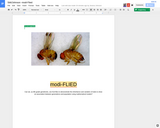
Students will breed fruit flies through several generations and record their data using mathematical models in order to demonstrate the inheritance of trait variations.
Students perform an activity similar to the childhood “telephone” game in which …
Students perform an activity similar to the childhood “telephone” game in which each communication step represents a biological process related to the passage of DNA from one cell to another. This game tangibly illustrates how DNA mutations can happen over several cell generations and the effects the mutations can have on the proteins that cells need to produce. Next, students use the results from the “telephone” game (normal, substitution, deletion or insertion) to test how the mutation affects the survivability of an organism in the wild. Through simple enactments, students act as “predators” and “eat” (remove) the organism from the environment, demonstrating natural selection based on mutation.
Students learn about mutations to both DNA and chromosomes, and uncontrolled changes …
Students learn about mutations to both DNA and chromosomes, and uncontrolled changes to the genetic code. They are introduced to small-scale mutations (substitutions, deletions and insertions) and large-scale mutations (deletion duplications, inversions, insertions, translocations and nondisjunctions). The effects of different mutations are studied as well as environmental factors that may increase the likelihood of mutations. A PowerPoint® presentation and pre/post-assessments are provided.
Psychology is designed to meet scope and sequence requirements for the single-semester …
Psychology is designed to meet scope and sequence requirements for the single-semester introduction to psychology course. The book offers a comprehensive treatment of core concepts, grounded in both classic studies and current and emerging research. The text also includes coverage of the DSM-5 in examinations of psychological disorders. Psychology incorporates discussions that reflect the diversity within the discipline, as well as the diversity of cultures and communities across the globe.Senior Contributing AuthorsRose M. Spielman, Formerly of Quinnipiac UniversityContributing AuthorsKathryn Dumper, Bainbridge State CollegeWilliam Jenkins, Mercer UniversityArlene Lacombe, Saint Joseph's UniversityMarilyn Lovett, Livingstone CollegeMarion Perlmutter, University of Michigan
No restrictions on your remixing, redistributing, or making derivative works. Give credit to the author, as required.
Your remixing, redistributing, or making derivatives works comes with some restrictions, including how it is shared.
Your redistributing comes with some restrictions. Do not remix or make derivative works.
Most restrictive license type. Prohibits most uses, sharing, and any changes.
Copyrighted materials, available under Fair Use and the TEACH Act for US-based educators, or other custom arrangements. Go to the resource provider to see their individual restrictions.