All art is political in the sense that all art takes place …
All art is political in the sense that all art takes place in the public arena and engages with an already existing ideology. Chinese artist, Ai Weiwei, offers an important contemporary example. The news that Chinese artist Ai Weiwei has been detained by authorities has prompted significant concern. Ai Weiwei has ben arrested by the Chinese authorities.
In this activity, students will practice answer the phone and having a …
In this activity, students will practice answer the phone and having a conversation in Chinese, using mannerisms common in Chinese. They will practice trying to make plans with someone over the phone, explaining their schedule, and politely accepting or declining an invitation.
In this activity, students will practice answer the phone and having a …
In this activity, students will practice answer the phone and having a conversation in a Chinese style. They will practice trying to make plans with someone over the phone, explaining their schedule, and politely accepting or declining an invitation.
In this activity, students will practice asking someone they meet where they …
In this activity, students will practice asking someone they meet where they are from and their nationality. Students will start by asking each other what country they are from, and then each student will be given a country card at random. Students will then practice asking and answering questions about various nationalities.
In 2008, the Beijing Urban Design Studio will focus on the issue …
In 2008, the Beijing Urban Design Studio will focus on the issue of Beijing's urban transformation under the theme of de-industrialization, by preparing an urban design and development plan for the Shougang (Capital Steel Factory) site. This studio will address whether portions of the old massive factory infrastructure can be preserved as a national industrial heritage site embedded into future new development; how to balance the cultural and recreational value of the site with environmental challenges; as well as how to use the site for urban development. A special focus of the studio will be to consider development approaches that minimize energy utilization. To research these questions, students will be asked to interact with clients from the factory, local residents, city officials and experts on transportation, environment, energy and real estate. They will assess strategic options for the steel factory and propose comprehensive plans for the design and development of the brownfield site.
The Beijing Urban Design Studio is a joint program between the MIT …
The Beijing Urban Design Studio is a joint program between the MIT and Tsinghua University Schools of Architecture and Planning. The goal of the studio is to foster international cooperation through the undertaking of a joint urban design and planning initiative in the city of Beijing involving important, often controversial, sites and projects. Since 1995, almost 250 MIT and Tsinghua University students and faculty have participated in this annual studio, making it one of the most successful and enduring international academic programs between China and the US. It has received the Irwin Sizer Award from MIT for outstanding innovation in education. The studio takes place over five weeks in June and July including several weeks in residence at Tsinghua University and two brief study tours to locations and projects that inform the work. It will include 18-20 MIT and 10-15 Tsinghua Architecture and Planning students. The Beijing City Planning Institute, responsible for strategic planning in the city, participates in the studio as the client.
This is the 20th anniversary of the Beijing Urban Design Studio, which …
This is the 20th anniversary of the Beijing Urban Design Studio, which is a joint program between the MIT and Tsinghua University Schools of Architecture and Planning. The goal of the studio is to foster international cooperation through the undertaking of a joint urban design and planning initiative in the city of Beijing involving important, often controversial, sites and projects. Since 1995, almost 250 MIT and Tsinghua University students and faculty have participated in this annual studio, making it one of the most successful and enduring international academic programs between China and the U.S. It has received the Irwin Sizer Award from MIT for outstanding innovation in education. The studio takes place over five weeks in June and July including several weeks in residence at Tsinghua University and two brief study tours to locations and projects that inform the work. It will include 18-20 MIT and 10-15 Tsinghua Architecture and Planning students. The Beijing City Planning Institute, responsible for strategic planning in the city, participates in the studio as the client.
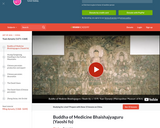
This art history video discussion examines the Buddha of Medicine Bhaishajyaguru (Yaoshi …
This art history video discussion examines the Buddha of Medicine Bhaishajyaguru (Yaoshi fo), c. 1319, Yuan dynasty, water-based pigments on clay mixed with straw, 24 feet, 8 inches x 49 feet 7 inches / 751.8 cm x 1511.3 cm (Metropolitan Museum of Art, New York).
(and where to find them) Short Description: A student-authored textbook, exploring beliefs, …
(and where to find them)
Short Description: A student-authored textbook, exploring beliefs, ideas, and religions of traditional China throughout history.
Long Description: Based on the course with the same name: A cultural history of the strange in pre-modern China. How did the Chinese people explain the existence of ghosts, demons, immortals, fox spirits, (maybe even unicorns) and many other strange creatures? What do the encounters between humans and these creatures tell us about the pre-modern Chinese worldview? And how much of that tradition is still alive in China now?
Word Count: 43949
(Note: This resource's metadata has been created automatically by reformatting and/or combining the information that the author initially provided as part of a bulk import process.)
This lecture course provides students with a comprehensive introduction to the international …
This lecture course provides students with a comprehensive introduction to the international relations of the People’s Republic of China. China’s foreign relations during the Cold War as well as contemporary diplomatic, security and economic issues will be examined to identify and explain China’s foreign policy goals and their implementation since 1949. Throughout, this course will investigate the sources of conflict and cooperation in China’s behavior, assessing competing explanations for key events and policies. Readings will be drawn from political science, history, and international relations theory.
China's rise as a great power raises important questions about how that …
China's rise as a great power raises important questions about how that power might be used in its relations with other states. Nowhere are such questions more salient than in the future trajectory of China's conflict behavior, including its approach to deterrence, crisis management and the use of force. To explore these important questions in China's international relations, this seminar examines the evolution of Chinese strategic thought, in primary sources as well as its reflection in the interactions among Chinese states and between China and other states.
This course forms the intermediate level of what constitutes a four-term foundation …
This course forms the intermediate level of what constitutes a four-term foundation in Mandarin. Upon completion of Chinese III and IV, students should be able to speak Chinese with fluency on everyday topics, reach a literacy level of 700 characters (approximately 2000 common words written in both traditional and simplified characters), read materials in simple standard written Chinese, and produce both orally and in writing short compositions on everyday topics. Throughout the course we will address issues of how cultural differences inform and are informed by different linguistic contexts and practices.
This subject is the second semester of four that forms an introduction …
This subject is the second semester of four that forms an introduction to modern standard Chinese, commonly called Mandarin. The emphasis is on further developing students' abilities to participate in simple, practical conversations on everyday topics as well as enhancing their abilities on reading and writing. The relationship between Chinese language and culture and the sociolinguistically appropriate use of language will be stressed throughout. A typical class includes performance of memorized basic conversations, drills, questions and discussion, and various types of communicative exercises. At the end of this course, students are expected to develop an understanding of the language learning process so that they will be able to continue studying effectively on their own.
Together with 21G.103 Chinese III, this course forms the intermediate level of …
Together with 21G.103 Chinese III, this course forms the intermediate level of what constitutes a four-term foundation in Mandarin. Upon completion of Chinese III and IV, students should be able to speak Chinese with fluency on everyday topics, reach a literacy level of 750 characters (approximately 1200 common words written in both traditional and simplified characters), read materials written in simple standard written Chinese, and produce both orally and in writing short compositions on everyday topics. Throughout the course we will address issues of how cultural differences inform and are informed by different linguistic contexts and practices.
This is the second semester of the intermediate level sequence intended for …
This is the second semester of the intermediate level sequence intended for students whose conversational ability exceeds their reading and writing skills. Focus is on reading and writing, as well as broadening conversational skills and control of standard pronunciation, for students with background in conversational Chinese. Lab work is required. On completing this course, students should be able to speak the language with standard pronunciation, to converse with some fluency on everyday topics, as well as on some specialized topics, to read edited, as well as authentic texts, in simplified or traditional characters with suitable fluency, and to be able to write composition on certain topics. The class consists of a combination of practice, reading, discussion, dictation, composition and feedback, net exploration via the web, and presentation. This course is conducted in Mandarin.
This course is the continuation of 21G.105. It is designed to further …
This course is the continuation of 21G.105. It is designed to further help students develop sophisticated conversational, reading and writing skills by combining traditional textbook material with their own explorations of Chinese speaking societies, using the human, literary, and electronic resources available at MIT and in the Boston area. Some special features of Chinese society, its culture, its customs and habits, its history, and the psychology of its people are introduced. The class consists of reading, discussion, composition, network exploration, and conversational practice. The course is conducted in Mandarin.
This course is the continuation of 21G.104/108. It is designed to further …
This course is the continuation of 21G.104/108. It is designed to further help students develop sophisticated conversational, reading and writing skills by combining traditional textbook material with their own explorations of Chinese speaking societies, using the human, literary, and electronic resources available at in the Boston area. Some of special features of Chinese society, its culture, its customs and habits, its history, and the psychology of its people are be introduced. The class consists of reading, discussion, composition, network exploration, and conversational practice. The course is conducted in Mandarin.
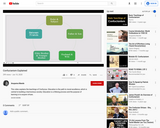
This video explains the teachings of Confucius. Education is the path to …
This video explains the teachings of Confucius. Education is the path to moral excellence, which is central to building a harmonious society. Education is a lifelong process and the purpose of learning is to acquire virtues.
This course provides a solid understanding of consumer decision-making and how new …
This course provides a solid understanding of consumer decision-making and how new products and services are developed, especially given the rapid pace of innovation and regulatory change, to help students succeed in consumer finance today. Specific examples will be drawn from retirement saving products, credit cards, peer to peer lending, cryptocurrencies, and financial advising.
Introductory module on contemporary China in the world. Intended for community college …
Introductory module on contemporary China in the world. Intended for community college students and lower division students enrolled in relevant courses in global studies, international studies, international relations, Asian studies, and political science. Includes suggested readings, lesson plan, and ancillary materials (lecture slides, notes, and student handout).
No restrictions on your remixing, redistributing, or making derivative works. Give credit to the author, as required.
Your remixing, redistributing, or making derivatives works comes with some restrictions, including how it is shared.
Your redistributing comes with some restrictions. Do not remix or make derivative works.
Most restrictive license type. Prohibits most uses, sharing, and any changes.
Copyrighted materials, available under Fair Use and the TEACH Act for US-based educators, or other custom arrangements. Go to the resource provider to see their individual restrictions.