Apply the sampling distribution of the sample mean as summarized by the …
Apply the sampling distribution of the sample mean as summarized by the Central Limit Theorem (when appropriate). In particular, be able to identify unusual samples from a given population.
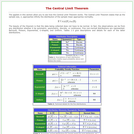
The applets in this section of Statistical Java allow you to see …
The applets in this section of Statistical Java allow you to see how the Central Limit Theorem works. The main page gives the characteristics of five non-normal distributions (Bernoulli, Poisson, Exponential, U-shaped, and Uniform).
This video talka about what is easily one of the most fundamental …
This video talka about what is easily one of the most fundamental and profound concepts in statistics and maybe in all of mathematics. And that's the central limit theorem.
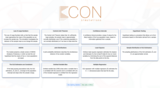
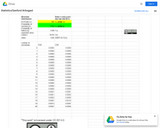
This website is an interactive educational application developed to simulate and visualize …
This website is an interactive educational application developed to simulate and visualize various statistical concepts:
Law of Large Numbers Central Limit Theorem Confidence Intervals Hypothesis Testing ANOVA Joint Distributions Least Squares Sample Distribution of OLS Estimators The OLS Estimators are Consistent Omitted Variable Bias Multiple Regression
Project of Professor Tanya Byker and Professor Amanda Gregg at Middlebury College, with research assistants Kevin Serrao, Class of 2018, Dylan Mortimer, Class of 2019, Ammar Almahdy, Class of 2020, Jacqueline Palacios, Class of 2020, Siyuan Niu, Class of 2021, David Gikoshvili, Class of 2021, and Ethan Saxenian, Class of 2022.
This course continues the content covered in 18.100 Analysis I. Roughly half …
This course continues the content covered in 18.100 Analysis I. Roughly half of the subject is devoted to the theory of the Lebesgue integral with applications to probability, and the other half to Fourier series and Fourier integrals.
This course provides a broad theoretical basis for system identification, estimation, and …
This course provides a broad theoretical basis for system identification, estimation, and learning. Students will study least squares estimation and its convergence properties, Kalman filters, noise dynamics and system representation, function approximation theory, neural nets, radial basis functions, wavelets, Volterra expansions, informative data sets, persistent excitation, asymptotic variance, central limit theorems, model structure selection, system order estimate, maximum likelihood, unbiased estimates, Cramer-Rao lower bound, Kullback-Leibler information distance, Akaike's information criterion, experiment design, and model validation.
In this course on the mathematics of infinite random matrices, students will …
In this course on the mathematics of infinite random matrices, students will learn about the tools such as the Stieltjes transform and Free Probability used to characterize infinite random matrices.
6.0002 is the continuation of 6.0001 Introduction to Computer Science and Programming …
6.0002 is the continuation of 6.0001 Introduction to Computer Science and Programming in Python and is intended for students with little or no programming experience. It aims to provide students with an understanding of the role computation can play in solving problems and to help students, regardless of their major, feel justifiably confident of their ability to write small programs that allow them to accomplish useful goals. The class uses the Python 3.5 programming language.
The tools of probability theory, and of the related field of statistical …
The tools of probability theory, and of the related field of statistical inference, are the keys for being able to analyze and make sense of data. These tools underlie important advances in many fields, from the basic sciences to engineering and management. This resource is a companion site to 6.041SC Probabilistic Systems Analysis and Applied Probability. It covers the same content, using videos developed for an edX version of the course.
This course will provide a solid foundation in probability and statistics for …
This course will provide a solid foundation in probability and statistics for economists and other social scientists. We will emphasize topics needed for further study of econometrics and provide basic preparation for 14.32 Econometrics. Topics include elements of probability theory, sampling theory, statistical estimation, and hypothesis testing.
This course covers descriptive statistics, the foundation of statistics, probability and random …
This course covers descriptive statistics, the foundation of statistics, probability and random distributions, and the relationships between various characteristics of data. Upon successful completion of the course, the student will be able to: Define the meaning of descriptive statistics and statistical inference; Distinguish between a population and a sample; Explain the purpose of measures of location, variability, and skewness; Calculate probabilities; Explain the difference between how probabilities are computed for discrete and continuous random variables; Recognize and understand discrete probability distribution functions, in general; Identify confidence intervals for means and proportions; Explain how the central limit theorem applies in inference; Calculate and interpret confidence intervals for one population average and one population proportion; Differentiate between Type I and Type II errors; Conduct and interpret hypothesis tests; Compute regression equations for data; Use regression equations to make predictions; Conduct and interpret ANOVA (Analysis of Variance). (Mathematics 121; See also: Biology 104, Computer Science 106, Economics 104, Psychology 201)
This is a three-credit course which covers topics that enhance the students’ …
This is a three-credit course which covers topics that enhance the students’ problem solving abilities, knowledge of the basic principles of probability/statistics, and guides students to master critical thinking/logic skills, geometric principles, personal finance skills. This course requires that students apply their knowledge to real-world problems. A TI-84 or comparable calculator is required. The course has four main units: Thinking Algebraically, Thinking Logically and Geometrically, Thinking Statistically, and Making Connections. This course is paired with a course in MyOpenMath which contains the instructor materials (including answer keys) and online homework system with immediate feedback. All course materials are licensed by CC-BY-SA unless otherwise noted.
Topics List for this Lesson: Sampling, Frequency Distributions, and GraphsMeasures of CenterMeasures of …
Topics List for this Lesson: Sampling, Frequency Distributions, and GraphsMeasures of CenterMeasures of VarianceNormal Distributions and Problem SolvingZ-Scores and Unusual ValuesEmpirical Rule and Central Limit TheoremScatterplots, Correlation, and Regression
Welcome to 6.041/6.431, a subject on the modeling and analysis of random …
Welcome to 6.041/6.431, a subject on the modeling and analysis of random phenomena and processes, including the basics of statistical inference. Nowadays, there is broad consensus that the ability to think probabilistically is a fundamental component of scientific literacy. For example:
The concept of statistical significance (to be touched upon at the end of this course) is considered by the Financial Times as one of "The Ten Things Everyone Should Know About Science". A recent Scientific American article argues that statistical literacy is crucial in making health-related decisions. Finally, an article in the New York Times identifies statistical data analysis as an upcoming profession, valuable everywhere, from Google and Netflix to the Office of Management and Budget.
The aim of this class is to introduce the relevant models, skills, and tools, by combining mathematics with conceptual understanding and intuition.
This course introduces students to the modeling, quantification, and analysis of uncertainty. …
This course introduces students to the modeling, quantification, and analysis of uncertainty. The tools of probability theory, and of the related field of statistical inference, are the keys for being able to analyze and make sense of data. These tools underlie important advances in many fields, from the basic sciences to engineering and management. Course Format
This course has been designed for independent study. It provides everything you will need to understand the concepts covered in the course. The materials include:
Lecture Videos by MIT Professor John Tsitsiklis Lecture Slides and Readings Recitation Problems and Solutions Recitation Help Videos by MIT Teaching Assistants Tutorial Problems and Solutions Tutorial Help Videos by MIT Teaching Assistants Problem Sets with Solutions Exams with Solutions
Related Resource
A complementary resource, Introduction to Probability, is provided by the videos developed for an EdX version of 6.041. These videos cover more or less the same content, in somewhat different order, and in somewhat more detail than the videotaped live lectures.
In these activities designed to introduce sampling distributions and the Central Limit …
In these activities designed to introduce sampling distributions and the Central Limit Theorem, students generate several small samples and note patterns in the distributions of the means and proportions that they themselves calculate from these samples.
A general statistics course, which includes understanding data, measures of central tendency, …
A general statistics course, which includes understanding data, measures of central tendency, measures of variation, binomial distributions, normal distributions, correlation and regression, probability and sampling distributions, Central Limit Theorem, confidence intervals, estimates of population parameters and hypothesis testing. Interpretation and data analysis are emphasized.
This 11-minute video lesson looks at the the central limit theorem and …
This 11-minute video lesson looks at the the central limit theorem and the sampling distribution of the sample mean. [Statistics playlist: Lesson 36 of 85]
No restrictions on your remixing, redistributing, or making derivative works. Give credit to the author, as required.
Your remixing, redistributing, or making derivatives works comes with some restrictions, including how it is shared.
Your redistributing comes with some restrictions. Do not remix or make derivative works.
Most restrictive license type. Prohibits most uses, sharing, and any changes.
Copyrighted materials, available under Fair Use and the TEACH Act for US-based educators, or other custom arrangements. Go to the resource provider to see their individual restrictions.