Despite the progress that has taken place in the sector of technology, …
Despite the progress that has taken place in the sector of technology, efforts of ensuring the inclusion of persons with disabilities remain limited. This is due to the limited opportunities of capacity building, weak awareness among engineers and industrialists, and the hindering of persons with disabilities’ voices in Information and Communication Technology (ICT) policy development and decision-making.
Inspired by the disposition of the Convention on the Rights of Persons with disabilities regarding accessibility, the Global Initiative for Information and Communication Technologies have been playing a pivotal role in promoting the persons with disabilities’ right to inclusive ICTs. Benefiting from the results of its Digital Accessibility Right Evaluation Index, G3ICT has realized the increasing commitment of CRPD States Parties to issues of ICT Accessibility. Nevertheless, The DARE index data show the remaining challenges encountered by governments’ procurement capacity for offering actual support to inclusive ICT programs, products, and services. ICT accessibility continues to be absent from higher education and vocational training programs. Furthermore, advocacy efforts of persons with disabilities and their organizations remain limited within the realm of digital accessibility.
This paper discusses G3ICT’s Digital Accessibility Right Education (DARE) Academy, and its role in tackling issues of digital divide through offering a platform of educational development and advocacy capacity enhancement for persons with disabilities around issues of ICT accessibility.
The Network of Conservation Educators and Practitioners (NCEP) produces peer-reviewed teaching resources …
The Network of Conservation Educators and Practitioners (NCEP) produces peer-reviewed teaching resources summarizing topics on conservation biology. Each module contains a synthesis document outlining the main concepts of a subject, a modifiable visual presentation, classroom exercises and solutions, teaching notes, and interdisciplinary case studies. For more information please visit where all NCEP modules are available free of charge.
The Network of Conservation Educators and Practitioners (NCEP) produces peer-reviewed teaching resources …
The Network of Conservation Educators and Practitioners (NCEP) produces peer-reviewed teaching resources summarizing topics on conservation biology. Each module contains a synthesis document outlining the main concepts of a subject, a modifiable visual presentation, classroom exercises and solutions, teaching notes, and interdisciplinary case studies. For more information please visit where all NCEP modules are available free of charge.
The potential of information and communication technology (ICT) to promote economic growth, …
The potential of information and communication technology (ICT) to promote economic growth, eradicate poverty, and assist the integration of emerging countries into the global economy has garnered widespread agreement. Accessible ICTs has become an obligation that as is governed by policies and procedures all around the world. Therefore, training the next generation of experts has now strategic aim of governments and institutes working toward inclusion and sustainable future. there also is a growing consensus that strengthening research capacity requires a concerted effort across multiple institutes. This paper discusses an overview of the ICT accessibility Research Capacity Building in the State of Qatar, including a Case Study on Our Experience at HBKU University and Working Together with the Mada Centre.
ICT accessibility and inclusive design is considered as a relevant and essential …
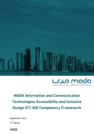
ICT accessibility and inclusive design is considered as a relevant and essential topic that needs to be well covered and integrated within capacity building, training and education curricula and programmes. Despite this urgent need, there is a lack of integration of ICT-AID aligned courses in educational institutions and professional development services based on a comprehensive Global competency framework delimiting all required relevant competencies and capabilities in the field of ICT accessibility and Inclusive Design. It is in this context that Mada center has developed an open competency framework in a bid to guide globally training of students and workers on ICT accessibility and inclusive design, so that they will be well prepared to excel in their accessibility professions and contribute in the creation of accessible products, contents and services.
This resource is a video abstract of a research paper created by …
This resource is a video abstract of a research paper created by Research Square on behalf of its authors. It provides a synopsis that's easy to understand, and can be used to introduce the topics it covers to students, researchers, and the general public. The video's transcript is also provided in full, with a portion provided below for preview:
"In 2015, the United Nations laid out 17 Sustainable Development Goals for the world. The goals aim to improve the lives of millions through actions such as ending poverty, protecting the planet, and assuring prosperity for all. Their success, however, depends on whether leaders can effectively mobilize to meet them. A team of researchers argues that this mobilization is unlikely without greater focus on implementing the goals in an integrated way. Finding connections among means of implementation, they say, will avoid wasted efforts and maximize efficiency. One of the biggest risks in overlooking these connections is contradictory efforts. Boosting industrial output, for example, could reduce the availability of clean drinking water. In this case, working towards one goal makes it harder to meet another. By understanding these connections between goals, however, leaders can tackle one target in a way that benefits many others..."
The rest of the transcript, along with a link to the research itself, is available on the resource itself.
This course focuses on the physical and economic renewal of urban neighborhood …
This course focuses on the physical and economic renewal of urban neighborhood Main Streets by combining classroom work with an applied class project. The course content covers four broad areas:
an overview of the causes for urban business district decline, the challenges faced in revitalization and the type of revitalization strategies employed; the physical and economic development planning tools used to understand and assess urban Main Streets from physical design and economic development perspectives; the policies, interventions, and investments used to foster urban commercial revitalization; and the formulation of a revitalization plan for an urban commercial district.
No restrictions on your remixing, redistributing, or making derivative works. Give credit to the author, as required.
Your remixing, redistributing, or making derivatives works comes with some restrictions, including how it is shared.
Your redistributing comes with some restrictions. Do not remix or make derivative works.
Most restrictive license type. Prohibits most uses, sharing, and any changes.
Copyrighted materials, available under Fair Use and the TEACH Act for US-based educators, or other custom arrangements. Go to the resource provider to see their individual restrictions.