Resources to mark the 100th day of school with math activities. Challenge …
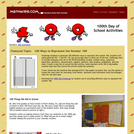
Resources to mark the 100th day of school with math activities. Challenge students to generate 100 different ways to represent the number 100. Students will easily generate 99 + 1 and 50 + 50, but encourage them to think out of the box. Challenge them to include examples from all of the NCTM Standards strands: number sense, numerical operations, geometry, measurement, algebra, patterns, data analysis, probability, discrete math, Create a class list to record the best entries. Some teachers write 100 in big bubble numeral style and then record the entries inside the numerals.
The goal of this lesson is to introduce students who are interested …
The goal of this lesson is to introduce students who are interested in human biology and biochemistry to the subtleties of energy metabolism (typically not presented in standard biology and biochemistry textbooks) through the lens of ATP as the primary energy currency of the cell. Avoiding the details of the major pathways of energy production (such as glycolysis, the citric acid cycle, and oxidative phosphorylation), this lesson is focused exclusively on ATP, which is truly the fuel of life. Starting with the discovery and history of ATP, this lesson will walk the students through 8 segments (outlined below) interspersed by 7 in-class challenge questions and activities, to the final step of ATP production by the ATP synthase, an amazing molecular machine. A basic understanding of the components and subcellular organization (e.g. organelles, membranes, etc.) and chemical foundation (e.g. biomolecules, chemical equilibrium, biochemical energetics, etc.) of a eukaryotic cell is a desired prerequisite, but it is not a must. Through interactive in-class activities, this lesson is designed to spark the students’ interest in biochemistry and human biology as a whole, but could serve as an introductory lesson to teaching advanced concepts of metabolism and bioenergetics in high school depending on the local science curriculum. No supplies or materials are needed.
Is climate change real? Yes, it is! And technologies to reduce Greenhouse …
Is climate change real? Yes, it is! And technologies to reduce Greenhouse Gas (GHG) emissions are being developed. One type of technology that is imperative in the short run is biofuels; however, biofuels must meet specifications for gasoline, diesel, and jet fuel, or catastrophic damage could occur. This course will examine the chemistry of technologies of bio-based sources for power generation and transportation fuels. We'll consider various biomasses that can be utilized for fuel generation, understand the processes necessary for biomass processing, explore biorefining, and analyze how biofuels can be used in current fuel infrastructure.
This class analyzes complex biological processes from the molecular, cellular, extracellular, and …
This class analyzes complex biological processes from the molecular, cellular, extracellular, and organ levels of hierarchy. Emphasis is placed on the basic biochemical and biophysical principles that govern these processes. Examples of processes to be studied include chemotaxis, the fixation of nitrogen into organic biological molecules, growth factor and hormone mediated signaling cascades, and signaling cascades leading to cell death in response to DNA damage. In each case, the availability of a resource, or the presence of a stimulus, results in some biochemical pathways being turned on while others are turned off. The course examines the dynamic aspects of these processes and details how biochemical mechanistic themes impinge on molecular/cellular/tissue/organ-level functions. Chemical and quantitative views of the interplay of multiple pathways as biological networks are emphasized. Student work culminates in the preparation of a unique grant application in an area of biological networks.
BioNook is Whitehead Institute's online biology resource, offering exciting learning enrichment for …
BioNook is Whitehead Institute's online biology resource, offering exciting learning enrichment for students, parents and teachers. Find videos, podcasts and stories on Whitehead Institute Science, as well as virtual workshop opportunities through BioNook’s After School Science Club, and ideas for nature-based activities. Explore free materials on biology and research—from deep explorations of how science is done, to stories following the lives of scientists, to suggestions for fun outside activities and hands-on citizen science projects.
This course focuses on the interaction of chemical engineering, biochemistry, and microbiology. …
This course focuses on the interaction of chemical engineering, biochemistry, and microbiology. Mathematical representations of microbial systems are featured among lecture topics. Kinetics of growth, death, and metabolism are also covered. Continuous fermentation, agitation, mass transfer, and scale-up in fermentation systems, and enzyme technology round out the subject material.
Word Count: 41284 Included H5P activities: 27 (Note: This resource's metadata has …
Word Count: 41284
Included H5P activities: 27
(Note: This resource's metadata has been created automatically by reformatting and/or combining the information that the author initially provided as part of a bulk import process.)
We are happy to welcome you to our second Open Educational Resource …
We are happy to welcome you to our second Open Educational Resource (OER) textbook, Biochemistry Free For All. Biochemistry is a relatively young science, but its rate of growth has been truly impressive. The rapid pace of discoveries, which shows no sign of slowing, is reflected in the steady increase in the size of biochemistry textbooks. Growing faster than the size of biochemistry books have been the skyrocketing costs of higher education and the even faster rising costs of college textbooks. These unfortunate realities have created a situation where the costs of going to college are beyond the means of increasing numbers of students.
The course, which spans two thirds of a semester, provides students with …
The course, which spans two thirds of a semester, provides students with a research-inspired laboratory experience that introduces standard biochemical techniques in the context of investigating a current and exciting research topic, acquired resistance to the cancer drug Gleevec. Techniques include protein expression, purification, and gel analysis, PCR, site-directed mutagenesis, kinase activity assays, and protein structure viewing. This class is part of the new laboratory curriculum in the MIT Department of Chemistry. Undergraduate Research-Inspired Experimental Chemistry Alternatives (URIECA) introduces students to cutting edge research topics in a modular format. Acknowledgments Development of this course was funded through an HHMI Professors grant to Professor Catherine L. Drennan.
Biology is designed for multi-semester biology courses for science majors. It is …
Biology is designed for multi-semester biology courses for science majors. It is grounded on an evolutionary basis and includes exciting features that highlight careers in the biological sciences and everyday applications of the concepts at hand. To meet the needs of today’s instructors and students, some content has been strategically condensed while maintaining the overall scope and coverage of traditional texts for this course. Instructors can customize the book, adapting it to the approach that works best in their classroom. Biology also includes an innovative art program that incorporates critical thinking and clicker questions to help students understand—and apply—key concepts.
Biology is designed for multi-semester biology courses for science majors. This version …
Biology is designed for multi-semester biology courses for science majors. This version has been adapted by faculty at Austin Community College. It is grounded on an evolutionary basis and includes exciting features that highlight careers in the biological sciences and everyday applications of the concepts at hand. To meet the needs of today’s instructors and students, some content has been strategically condensed while maintaining the overall scope and coverage of traditional texts for this course. Instructors can customize the book, adapting it to the approach that works best in their classroom. Biology also includes an innovative art program that incorporates critical thinking and clicker questions to help students understand—and apply—key concepts.
Life is all around us, both as multicellular organisms such as the …
Life is all around us, both as multicellular organisms such as the iguana and bamboo above, as well as the unicellular microorganisms such as bacteria. Life is present on every continent, in the air and in the waters of the world. There is life even in the Mariana Trench, seven miles below the surface of the ocean. As of 2010 biologists have described and classified 1.7 million plants and animals, and estimate that there are till over five million species still undiscovered.This chapter will introduce the ways we study the science of Biology in the twenty-first century, the characteristics of living organisms and their classification.
Living things are highly organized and structured, following a hierarchy that can …
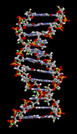
Living things are highly organized and structured, following a hierarchy that can be examined on a scale from small to large. The atom is the smallest and most fundamental unit of matter. It consists of a nucleus surrounded by electrons. Atoms form molecules. A molecule is a chemical structure consisting of at least two atoms held together by one or more chemical bonds. Many molecules that are biologically important are macromolecules, large molecules that are typically formed by polymerization (a polymer is a large molecule that is made by combining smaller units called monomers, which are simpler than macromolecules). An example of a macromolecule is deoxyribonucleic acid (DNA) (Figure 1.15), which contains the instructions for the structure and functioning of all living organisms.
By the end of this section, you will be able to:Identify and …
By the end of this section, you will be able to:Identify and describe the properties of lifeDescribe the levels of organization among living thingsRecognize and interpret a phylogenetic treeList examples of different sub disciplines in biology
By the end of this section, you will be able to:Identify and …
By the end of this section, you will be able to:Identify and describe the properties of lifeDescribe the levels of organization among living thingsRecognize and interpret a phylogenetic treeList examples of different sub disciplines in biology
A free online textbook for biophysical chemistry. The book covers probability, statistics, …
A free online textbook for biophysical chemistry. The book covers probability, statistics, thermodynamics, kinetics, Monte Carlo methods, biochemistry, diffusion, stochastic processes, and others.
If the dialysis is the most know method used for buffer exchange, …
If the dialysis is the most know method used for buffer exchange, other methods less as desalting and tangential flow filtrations can be useful to speed up or scale up the buffer exchange process.
No restrictions on your remixing, redistributing, or making derivative works. Give credit to the author, as required.
Your remixing, redistributing, or making derivatives works comes with some restrictions, including how it is shared.
Your redistributing comes with some restrictions. Do not remix or make derivative works.
Most restrictive license type. Prohibits most uses, sharing, and any changes.
Copyrighted materials, available under Fair Use and the TEACH Act for US-based educators, or other custom arrangements. Go to the resource provider to see their individual restrictions.