The goal of this lesson is to introduce students who are interested …
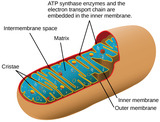
The goal of this lesson is to introduce students who are interested in human biology and biochemistry to the subtleties of energy metabolism (typically not presented in standard biology and biochemistry textbooks) through the lens of ATP as the primary energy currency of the cell. Avoiding the details of the major pathways of energy production (such as glycolysis, the citric acid cycle, and oxidative phosphorylation), this lesson is focused exclusively on ATP, which is truly the fuel of life. Starting with the discovery and history of ATP, this lesson will walk the students through 8 segments (outlined below) interspersed by 7 in-class challenge questions and activities, to the final step of ATP production by the ATP synthase, an amazing molecular machine. A basic understanding of the components and subcellular organization (e.g. organelles, membranes, etc.) and chemical foundation (e.g. biomolecules, chemical equilibrium, biochemical energetics, etc.) of a eukaryotic cell is a desired prerequisite, but it is not a must. Through interactive in-class activities, this lesson is designed to spark the students’ interest in biochemistry and human biology as a whole, but could serve as an introductory lesson to teaching advanced concepts of metabolism and bioenergetics in high school depending on the local science curriculum. No supplies or materials are needed.
Biology is designed for multi-semester biology courses for science majors. It is …
Biology is designed for multi-semester biology courses for science majors. It is grounded on an evolutionary basis and includes exciting features that highlight careers in the biological sciences and everyday applications of the concepts at hand. To meet the needs of today’s instructors and students, some content has been strategically condensed while maintaining the overall scope and coverage of traditional texts for this course. Instructors can customize the book, adapting it to the approach that works best in their classroom. Biology also includes an innovative art program that incorporates critical thinking and clicker questions to help students understand—and apply—key concepts.
By the end of this section, you will be able to:Discuss the …
By the end of this section, you will be able to:Discuss the importance of electrons in the transfer of energy in living systemsExplain how ATP is used by the cell as an energy source
By the end of this section, you will be able to:Discuss the …
By the end of this section, you will be able to:Discuss the importance of electrons in the transfer of energy in living systemsExplain how ATP is used by the cell as an energy source
By the end of this section, you will be able to:Explain the …
By the end of this section, you will be able to:Explain the role of ATP as the cellular energy currencyDescribe how energy is released through hydrolysis of ATP
By the end of this section, you will be able to:Explain the …
By the end of this section, you will be able to:Explain the role of ATP as the cellular energy currencyDescribe how energy is released through hydrolysis of ATP
By the end of this section, you will be able to:Explain how …
By the end of this section, you will be able to:Explain how plants absorb energy from sunlightDescribe short and long wavelengths of lightDescribe how and where photosynthesis takes place within a plant
By the end of this section, you will be able to:Explain how …
By the end of this section, you will be able to:Explain how plants absorb energy from sunlightDescribe short and long wavelengths of lightDescribe how and where photosynthesis takes place within a plant
Fundamentals of Biology focuses on the basic principles of biochemistry, molecular biology, …
Fundamentals of Biology focuses on the basic principles of biochemistry, molecular biology, genetics, and recombinant DNA. These principles are necessary to understanding the basic mechanisms of life and anchor the biological knowledge that is required to understand many of the challenges in everyday life, from human health and disease to loss of biodiversity and environmental quality. Course Format
This course has been designed for independent study. It consists of four units, one for each topic. The units can be used individually or in combination. The materials for each unit include:
Lecture Videos by MIT faculty. Learning activities, including Interactive Concept Quizzes, designed to reinforce main concepts from lectures. Problem Sets you do on your own and check your answers against the Solutions when you're done. Problem Solving Video help sessions taught by experienced MIT Teaching Assistants. Lists of important Terms and Definitions. Suggested Topics and Links for further study. Exams with Solution Keys.
Content Development
Eric Lander Robert Weinberg Tyler Jacks Hazel Sive Graham Walker Sallie Chisholm Dr. Michelle Mischke
This resource is a video abstract of a research paper created by …
This resource is a video abstract of a research paper created by Research Square on behalf of its authors. It provides a synopsis that's easy to understand, and can be used to introduce the topics it covers to students, researchers, and the general public. The video's transcript is also provided in full, with a portion provided below for preview:
"Chloroplasts harness sunlight to power all the processes that help plants grow. Like engines, they must carefully balance their fuel to run efficiently. In plants, that’s the ratio of ATP to NADPH, two forms of fuel produced by photosynthesis. But scientists have long known that ATP/NADPH ratios in chloroplasts fall short of the value required for plants to turn CO₂ into sugars. To find out how plants overcome this imbalance, researchers tracked ATP in Arabidopsis plants in real time using a fluorescent protein sensor. They found that immature chloroplasts in young seedlings imported cytosolic ATP for chloroplast biogenesis, using an abundance of ATP transporter proteins to do the job, but mature chloroplasts downregulated these transporters to minimize ATP importation. Instead of importing ATP to maintain fuel balance, chloroplasts exported NADPH in the form of malate..."
The rest of the transcript, along with a link to the research itself, is available on the resource itself.
These lecture slides contain open with a scenario, and chapter images, lecture …
These lecture slides contain open with a scenario, and chapter images, lecture outlines, and brief conceptual overviews. The slides were based on the OpenStax image slides and were developed by Asha Rao, Matthew Aderholt, and Veronica Amaku.
No restrictions on your remixing, redistributing, or making derivative works. Give credit to the author, as required.
Your remixing, redistributing, or making derivatives works comes with some restrictions, including how it is shared.
Your redistributing comes with some restrictions. Do not remix or make derivative works.
Most restrictive license type. Prohibits most uses, sharing, and any changes.
Copyrighted materials, available under Fair Use and the TEACH Act for US-based educators, or other custom arrangements. Go to the resource provider to see their individual restrictions.