This OER explores the basic organization of the Pythagorean Solids. It contains …
This OER explores the basic organization of the Pythagorean Solids. It contains both an activity as well as resources for further exploration. It is a product of the OU Academy of the Lynx, developed in conjunction with the Galileo's World Exhibition at the University of Oklahoma.
Andrea Mulder-Slater (creator of www.KinderArt.com ) designed this lesson to be used …
Andrea Mulder-Slater (creator of www.KinderArt.com ) designed this lesson to be used with children ages 5 and older. However, this lesson can be easily adapted to work with individuals of all ages as a way of identifying and expressing emotions. Participants will gain an understanding of how much of a role emotion plays in art-making as they create paintings based on feelings.
Aboriginal Hand Print (art + history; art + social studies) "One old …
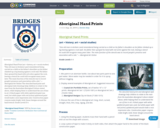
Aboriginal Hand Print (art + history; art + social studies) "One old man in Arnhem Land remembered being carried as a child on his father's shoulders as his father climbed up a log leaning against a rock wall. His father then sprayed his hand with red ochre against the rock, leaving a stencil he could still recognize many years later. The main function of the stencils was to record people's presence and association with a site." — Aboriginal Art Online
The stenciled hand print and aboriginal style drawings help children to relate to the man from the Australian Aboriginal Culture stated above, while helping them to understand the use of line in art. A black paper with white splattered paint was used, but white paper with red (ochre) splattered paint would make a nice impression also. Construction paper crayons make bright, bold, linear designs around the hand stencil.
This class is developed around the concept of disobedient interference within the …
This class is developed around the concept of disobedient interference within the existing models of production of space and knowledge. Modeling is the main modus operandi of the class as students will be required to make critical diagrammatic cuts through processes of production in different thematic registers – from chemistry, law and economy to art, architecture and urbanism – in order to investigate the sense of social responsibility and control over the complex agendas embedded in models that supports production of everyday objects and surroundings. Students will be encouraged to explore relations between material or immaterial aspects and agencies of production, whether they emerged as a consequence of connection of mind, body and space, or the infrastructural, geographical and ecological complexities of the Anthropocene. These production environments will be taken as modeling settings.
This SALT Interpretation Pack has been designed as a resource for educators …
This SALT Interpretation Pack has been designed as a resource for educators and students as they explore the themes of the Ahmet Öğüt "Across the Slope" exhibition at SALT Beyoğlu in Istanbul, Turkey. Designed for use in high school classrooms, its contents include activities, multimedia resources, terminology and opportunities for discussion. Educators are encouraged to adapt, shape and build upon these materials to best meet the needs of their students and teaching curricula.
"Across the Slope" was first exhibited at Centre d’Art Santa Mònica, Barcelona, in 2008. An installation of a modified Seat 131 (the Fiat 131 Mirafiori model produced in Spain) hovering over a man-made slope, "Across the Slope" responds to the dream of an emerging working class. When, in the 1970s, Fiat began licensing automobile production to manufacturers in Turkey, Spain and Morocco, car prices in these countries dropped. Cars were no longer luxury items. They became affordable consumer products—and symbols of a “modern,” Western lifestyle. Though modification of the Fiat was common, as Öğüt demonstrates, no matter how advanced or decorative the modifications, a car’s capacity remains the same: “A slope is always a slope, and it is always possible for a car to get stuck on one.”
SALT Beyoğlu’nda düzenlenen “Yokuş Boyunca” sergisindeki temaları açıklayan bu Yorumlama Rehberi, eğitimciler …
SALT Beyoğlu’nda düzenlenen “Yokuş Boyunca” sergisindeki temaları açıklayan bu Yorumlama Rehberi, eğitimciler ve lise öğrencileri için bir kaynakça olarak hazırlanmıştır. Eğitimcilerin, rehberin içeriğindeki aktiviteler, multimedya kaynakları, terminoloji ve tartışma olanaklarını öğrencilerinin ihtiyaçlarına en iyi cevap verecek şekilde düzenleyerek müfredatlarına uyarlamalarını öneririz.
“Yokuş Boyunca” ilk olarak 2008 yılında, Barselona’daki Centre d’Art Santa Mònica’da [Santa Mònica Sanat Merkezi] sergilenmiştir. Sergi alanında oluşturulmuş bir yokuşta kalmış modifiye bir Seat 131 (İspanya’da üretilmiş Fiat 131 Mirafiori modeli) enstalasyonu olan “Yokuş Boyunca,” gelişmekte olan orta sınıfın mütevazı hayallerine gönderme yapmaktadır.
Fiat’ın 1970’lerde Türkiye, İspanya ve Fas’taki imalatçılara otomobil üretim ruhsatı vermeye başlamasıyla bu ülkelerdeki araba fiyatları düşer. Araba artık bir lüks olmaktan çıkar; bütçeye uygun bir tüketim ürünü ve “modern”, Batılı yaşam tarzının bir simgesi haline gelir. Fiat’ın modifikasyonu yaygındır; ancak Öğüt’ün “Yokuş Boyunca”’da gösterdiği gibi, modifikasyonlar ne denli gelişmiş ya da dekoratif olursa olsun, bir arabanın kapasitesi hep aynı kalır: “Yokuş hep yokuştur ve bir arabanın bir yokuşta kalakalması her zaman mümkündür.”
Al-Bab is a portal website designed to introduce non-Arabs to Arab culture …
Al-Bab is a portal website designed to introduce non-Arabs to Arab culture by providing links to news sources, country profiles, articles, and a blog on Middle East current events. There are also specific links related to learning Arabic: dictionaries, language classes, textbooks, and other information pertaining to the study of Arabic. A free e-book, The Birth of Modern Yemen, is available for download.
American Encounters provides a narrative of the history of American art that …
American Encounters provides a narrative of the history of American art that focuses on historical encounters among diverse cultures, upon broad structural transformations such as the rise of the middle classes and the emergence of consumer and mass culture, and on the fluid conversations between "high" art and vernacular expressions. The text emphasizes the intersections among cultures and populations, as well as the exchanges, borrowings, and appropriations that have enriched and vitalized our collective cultural heritage.
This lesson guides students through analysis of non-print media as a vehicle …
This lesson guides students through analysis of non-print media as a vehicle for argument. Added to this are Pulitzer Prize Winning Photographs for them to pick from. It is important to note that the photos contain graphic images.
This lesson guides students through analysis of non-print media as a vehicle …
This lesson guides students through analysis of non-print media as a vehicle for argument. Added to this are Pulitzer Prize Winning Photographs for them to pick from.
Kirsten Lepore is an artist and filmmaker who works with different animation …
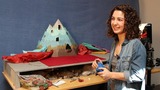
Kirsten Lepore is an artist and filmmaker who works with different animation techniques, including stop-motion animation and claymation. With these videos, learn more about the intentions behind her food-focused film, the unusual materials she works with to create her projects, and why she loves the laborious process of stop-motion animation. Lepore also demonstrates the basics of shooting a stop-motion animation film.
This resource was created by Kayla Henery, in collaboration with Lynn Bowder, …
This resource was created by Kayla Henery, in collaboration with Lynn Bowder, as part of ESU2's Mastering the Arts project. This project is a four year initiative focused on integrating arts into the core curriculum through teacher education and experiential learning.
The main objective of this lesson is to illustrate an important application …
The main objective of this lesson is to illustrate an important application of mathematics in practical life -- namely in art. Most of the pictures selected for this lesson are visible on the walls of Al-Hambra – Granada (Spain), which is one of the most important landmarks in the Islamic civilization. There are three educational goals for this lesson: (1) establishing the concept of isometries; (2) giving real-life examples of groups; (3) demonstrating the importance of matrices and their applications. As background for this lesson, students just need some familiarity with the concept of a group and a limited knowledge about matrices and the inverse of a non-singular matrix.
What started out as a gallery to display the calligraphy of two …
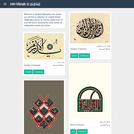
What started out as a gallery to display the calligraphy of two artists is today a website devoted to the art of Arabic calligraphy. It includes a wall where other artists can post their own Arabic calligraphy, basic information on the Arabic language, a blog about calligraphy, and more. Users can post comments on the website.
This page offers 186 different children's stories written in Arabic. Topics range …
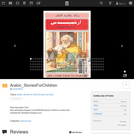
This page offers 186 different children's stories written in Arabic. Topics range from scientific matters such as how to build a telescope to literature and folktales, including Indian folktales. Stories must be viewed using Java and users must click on the link to view the resource and its title. Many contain images and other illustrations. The intended age level of the reader varies from story to story.
This is a ten-week course broken into thematic topics. Its current design …
This is a ten-week course broken into thematic topics. Its current design is asynchronous online, though you will find a mix of asynchronous and synchronous activity options. It can be modified for any modality. Included are weekly activities, exercises, projects, and slides following the provided syllabus.
• ART102 Syllabus • Week 1: What is Art? What do you want from art? • Week 2: Elements of Art: Formal Elements • Week 3: Elements of Art: Principles of Design • Week 4: Describing Art • Week 5: Media & Materials: Images • Week 6: Media & Materials: Objects • Week 7: Symbols & Iconography • Week 8: Contexts of Art • Week 9: Art and Artists • Week 10: Public Art/Art & Controversy
Art 200 is an introductory course that chronicles the major developments in …
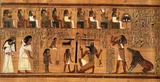
Art 200 is an introductory course that chronicles the major developments in art that span from the Upper Paleolithic Period through the Fourteenth Century. This broad, comprehensive survey details this time period’s diverse range of artistic output while identifying the wider contexts (historical, social, cultural, religious) that affected the characteristics and motivations of early art production.
No restrictions on your remixing, redistributing, or making derivative works. Give credit to the author, as required.
Your remixing, redistributing, or making derivatives works comes with some restrictions, including how it is shared.
Your redistributing comes with some restrictions. Do not remix or make derivative works.
Most restrictive license type. Prohibits most uses, sharing, and any changes.
Copyrighted materials, available under Fair Use and the TEACH Act for US-based educators, or other custom arrangements. Go to the resource provider to see their individual restrictions.