This class is developed around the concept of disobedient interference within the …
This class is developed around the concept of disobedient interference within the existing models of production of space and knowledge. Modeling is the main modus operandi of the class as students will be required to make critical diagrammatic cuts through processes of production in different thematic registers – from chemistry, law and economy to art, architecture and urbanism – in order to investigate the sense of social responsibility and control over the complex agendas embedded in models that supports production of everyday objects and surroundings. Students will be encouraged to explore relations between material or immaterial aspects and agencies of production, whether they emerged as a consequence of connection of mind, body and space, or the infrastructural, geographical and ecological complexities of the Anthropocene. These production environments will be taken as modeling settings.
Al-Bab is a portal website designed to introduce non-Arabs to Arab culture …
Al-Bab is a portal website designed to introduce non-Arabs to Arab culture by providing links to news sources, country profiles, articles, and a blog on Middle East current events. There are also specific links related to learning Arabic: dictionaries, language classes, textbooks, and other information pertaining to the study of Arabic. A free e-book, The Birth of Modern Yemen, is available for download.
Amag! is the architecture magazine for children. It is a game to …
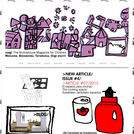
Amag! is the architecture magazine for children.
It is a game to cut, brake, destroy…
It is for all children from 5 to 10 years.
It is an Open Educational Resource (OER) for schools around the world.
Amag! is a building material, as well as a game, and a research tool. Children learn about architecture, playing with the pages of the magazine.
Amag! consists of articles: A4 for download, print and play. Each article is created by an author or team. All of them are specialist on architecture education for children and youth, or art professionals related to children.
An analysis of historical structures is presented themed sections based around construction …
An analysis of historical structures is presented themed sections based around construction materials. Structures from all periods of history are analyzed. The goal of the class is to provide an understanding of the preservation of historic structures for all students.
Students will examine two paintings and discuss the use of architectural elements …
Students will examine two paintings and discuss the use of architectural elements and vantage points in the paintings. Referring to the elements of art, students will also examine how three-dimensional shapes are transformed into two-dimensional forms in paintings, as well as the use of indoor space vs. outdoor space.
This course focuses on the archaeology of the Greek and Roman city. …
This course focuses on the archaeology of the Greek and Roman city. It investigates the relationship between urban architecture and the political, social, and economic role of cities in the Greek and Roman world, by analyzing a range of archaeological and literary evidence relevant to the use of space in Greek and Roman cities (e.g. Athens, Paestum, Rome, Pompeii) and a range of theoretical frameworks for the study of ancient urbanism.
At first glance, Katena might look like an ordinary inflatable with an …
At first glance, Katena might look like an ordinary inflatable with an unusually complex and oversized structure. But when they walk inside, visitors soon realize this is an entirely different experience. They enter a world apart, a world of interconnecting tunnels and domes saturated with light and color, called a luminarium. This video will take your students on a virtual tour of one luminarium that was featured at the Cincinnati BLINK festival. They will learn how the design team of Architects of Air blends geometry, art, and architecture to create a pneumatic, or air-filled, structure in which form must follow function.
This class investigates the use of computers in architectural design and construction. …
This class investigates the use of computers in architectural design and construction. It begins with a pre-prepared design computer model, which is used for testing and process investigation in construction. It then explores the process of construction from all sides of the practice: detail design, structural design, and both legal and computational issues.
This is the second undergraduate design studio. It introduces a full range …
This is the second undergraduate design studio. It introduces a full range of architectural ideas and issues through drawing exercises, analyses of precedents, and explored design methods. Students will develop design skills by conceptualizing and representing architectural ideas and making aesthetic judgments about building design. Discussions regarding architecture's role in mediating culture, nature and technology will help develop the students' architectural vocabulary.
This studio will investigate the social, programmatic, tectonic and phenomenological performance and …
This studio will investigate the social, programmatic, tectonic and phenomenological performance and character of a student gathering place on the MIT campus. Whether it is simply for socializing or for more specific events, the student gathering place will serve as a refuge from the vigorous educational environment of the Institute, and it will reinforce a critical sense of "place" through the almost logical organization of its program. The place will foster a casual discovery of "being": a reflection upon the student's own existence based upon participation in group events and an intellectual attitude toward acting. To create a space that inspires, rather than imposes: such a discovery is the foremost challenge of this studio.
The theme that unites the Level II studios in the fall semester …
The theme that unites the Level II studios in the fall semester is a focus upon the 'making of architecture and built form' as a tectonic, technical and materially driven endeavor. It is a design investigation that is rooted in a larger culture of materiality and the associated phenomena, but a study of the language and production of built form as an integrated response to the conceptual proposition of the project. The studio will look to works of architecture where the material tectonic and its resultant technology or fabrication become instrumental to the realization of the ideas, in whatever form they may take. This becomes the 'art of technology' -- suggesting a level of innovation and creative manipulation as part of the design process to transform material into a composition of beauty and poetry as well as environmental control. In this regard the studio will look to the works and design processes of a number of architects including Shigeru Ban, Peter Zumthor, Herzog and deMeuron, Kazuyo Sejima, Richard Horden, Rick Joy and Glenn Murcutt among others.
This semester students are asked to transform the Hereshoff Museum in Bristol, …
This semester students are asked to transform the Hereshoff Museum in Bristol, Rhode Island, through processes of erasure and addition. Hereshoff Manufacturing was recognized as one of the premier builders of America's Cup racing boats between 1890's and 1930's. The studio, however, is about more than the program. It is about land, water, and wind and the search for expressing materially and tectonically the relationships between these principle conditions. That is, where the land is primarily about stasis (docking, anchoring and referencing our locus), water's fluidity holds the latent promise of movement and freedom. Movement is activated by wind, allowing for negotiating the relationship between water and land.
The project for this studio is to design a demonstration project for …
The project for this studio is to design a demonstration project for a site near the French Quarter in New Orleans. The objectives of the project are the following:
To design more intense housing, community, educational and commercial facilities in four to six story buildings. To explore the "space between" buildings as a way of designing and shaping objects. To design at three scales - dwelling, cluster and overall. To design dwellings where the owners may be able to help build and gain a skill for employment. To provide/design facilities that can help the residents to gain education and skills.
This studio explores the notion of in-between by engaging several relationships; the …
This studio explores the notion of in-between by engaging several relationships; the relationship between intervention and perception, between representation and notation and between the fixed and the temporal. In the Exactitude in Science, Jorge Luis Borges tells the perverse tale of the one to one scale map, where the desire for precision and power leads to the escalating production of larger and more accurate maps of the territory. For Jean Baudrillard, "The territory no longer precedes the map nor survives it. …it is the map that precedes the territory... and thus, it would be the territory whose shreds are slowly rotting across the map." The map or the territory, left to ruin-shredding across the 'other', beautifully captures the tension between reality and representation. Mediating between collective desire and territorial surface, maps filter, create, frame, scale, orient, and project. A map has agency. It is not merely representational but operational, the experience and discursive potential of this process lies in the reciprocity between the representation and the real. It is in-between these specific sets of relationships that this studio positions itself.
Students will examine the use of the elements of art, including line, …
Students will examine the use of the elements of art, including line, shape, form, texture, and color, in a drawing. They will also study the elements of architecture and learn to identify architectural elements in detail and their relationship to the surrounding landscape. Then students will draw an ancient Roman temple in perspective, integrating architectural elements in the drawing.
This is the second undergraduate architecture design studio, which introduces design logic …
This is the second undergraduate architecture design studio, which introduces design logic and skills that enable design thinking, representation, and development. Through the lens of nano-scale machines, technologies, and phenomena, students are asked to explore techniques for describing form, space, and architecture. Exercises encourage various connotations of the "machine" and challenge students to translate conceptual strategies into more integrated design propositions through both digital and analog means.
This architectural studio will have one main project for the semester: to …
This architectural studio will have one main project for the semester: to explore the issues surrounding the redesign of an area in Havana, Cuba. It is a typical area about the size of a Law of Indies block that presently has a mix of housing, work, and shopping, in buildings that need to be replaced and others that need to be rehabilitated. There is also vacant land, and buildings that are unused. Part of the blocks front on the Malecon, the street next to the water. The other edge fronts onto a typical neighborhood. The intention is to study the culture through an understanding of one area of Havana and then design an "echo" in architectural form. The design will include public space as well as a mix of buildings: some new, some rehabilitated.
This subject introduces skills needed to build within a landscape establishing continuities …
This subject introduces skills needed to build within a landscape establishing continuities between the built and natural world. Students learn to build appropriately through analysis of landscape and climate for a chosen site, and to conceptualize design decisions through drawings and models. This class was taught concurrently with course 4.125A. Some of the assignments are the same, some are different, and the sites for the final project are different. But since they were taught in tandem, it would be useful to look at both together.
This subject introduces skills needed to build within a landscape establishing continuities …
This subject introduces skills needed to build within a landscape establishing continuities between the built and natural world. Students learn to build appropriately through analysis of landscape and climate for a chosen site, and to conceptualize design decisions through drawings and models. This class was taught concurrently with 4.125B. Some of the assignments are the same, some are different, and the sites for the final project are different. But since they were taught in tandem, it would be useful to look at both together.
This is the second undergraduate design studio. It introduces a full range …
This is the second undergraduate design studio. It introduces a full range of architectural ideas and issues through drawing exercises, analyses of precedents, and explored design methods. Students will develop design skills by conceptualizing and representing architectural ideas and making aesthetic judgments about building design. Discussions regarding architecture's role in mediating culture, nature and technology will help develop the students' architectural vocabulary.
No restrictions on your remixing, redistributing, or making derivative works. Give credit to the author, as required.
Your remixing, redistributing, or making derivatives works comes with some restrictions, including how it is shared.
Your redistributing comes with some restrictions. Do not remix or make derivative works.
Most restrictive license type. Prohibits most uses, sharing, and any changes.
Copyrighted materials, available under Fair Use and the TEACH Act for US-based educators, or other custom arrangements. Go to the resource provider to see their individual restrictions.