Anatomy and Physiology is a dynamic textbook for the two-semester human anatomy and …
Anatomy and Physiology is a dynamic textbook for the two-semester human anatomy and physiology course for life science and allied health majors. The book is organized by body system and covers standard scope and sequence requirements. Its lucid text, strategically constructed art, career features, and links to external learning tools address the critical teaching and learning challenges in the course. The web-based version of Anatomy and Physiology also features links to surgical videos, histology, and interactive diagrams.
Biology is designed for multi-semester biology courses for science majors. It is …
Biology is designed for multi-semester biology courses for science majors. It is grounded on an evolutionary basis and includes exciting features that highlight careers in the biological sciences and everyday applications of the concepts at hand. To meet the needs of today’s instructors and students, some content has been strategically condensed while maintaining the overall scope and coverage of traditional texts for this course. Instructors can customize the book, adapting it to the approach that works best in their classroom. Biology also includes an innovative art program that incorporates critical thinking and clicker questions to help students understand—and apply—key concepts.
By the end of this section, you will be able to:Discuss the …
By the end of this section, you will be able to:Discuss the different types of skeletal systemsExplain the role of the human skeletal systemCompare and contrast different skeletal systems
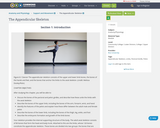
In this video we look the appendicular skeleton in general and the …
In this video we look the appendicular skeleton in general and the shoulder girdle.
Lesson 13 in The Skeletal System series. This is part of our Anatomy and Physiology lecture series.
If this video helps you please be sure to LST -like subscribe and tell your friends. Your support help us make more videos. For the complete series please visit http://mrfordsclass.net/
Videos in the skeletal system series: -Introduction to the Skeletal System (07:01): http://youtu.be/DT8CNqI8x0o -General Features of Bone (07:02): http://youtu.be/AITDZj2utok -Types of Bone (07:03): http://youtu.be/Dnw3WflKuzg -Bone Modeling (07:04): http://youtu.be/YjKbvlvhHmM -Cranial Bone pt 1 (07:05): http://youtu.be/W2gAC3QAU08 -Cranial Bone pt 2 (07:06): http://youtu.be/aMJKT0cSJng -Facial Bones pt 1 (07:07): http://youtu.be/ocUlnpPxCv8 -Facial Bones pt 2 (07:08): http://youtu.be/BA_kO9yhWT4 -Thoracic Cage ( 07:09): http://youtu.be/zvZffUPlcbs -Vertebral Column (07:10): http://youtu.be/V0694vZmWY8 -The Vertebrae (07:11): http://youtu.be/ozQmy6Sx2cA -Appendicular Skeleton & Shoulder Girdle (07:13): http://youtu.be/6bBcpGCQRZ4
No restrictions on your remixing, redistributing, or making derivative works. Give credit to the author, as required.
Your remixing, redistributing, or making derivatives works comes with some restrictions, including how it is shared.
Your redistributing comes with some restrictions. Do not remix or make derivative works.
Most restrictive license type. Prohibits most uses, sharing, and any changes.
Copyrighted materials, available under Fair Use and the TEACH Act for US-based educators, or other custom arrangements. Go to the resource provider to see their individual restrictions.