Farming ants might sound like a crazy thing to do unless you …
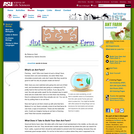
Farming ants might sound like a crazy thing to do unless you might like to eat chocolate covered ants. It turns out we can learn a lot from ants and the best way is to build your own ant farm.
There are several different ways to get ants for an ant farm, …
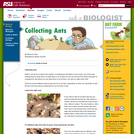
There are several different ways to get ants for an ant farm, depending on when you would like to start the farm and how long you would like for your ant farm to last.
This resource is a video abstract of a research paper created by …
This resource is a video abstract of a research paper created by Research Square on behalf of its authors. It provides a synopsis that's easy to understand, and can be used to introduce the topics it covers to students, researchers, and the general public. The video's transcript is also provided in full, with a portion provided below for preview:
"Roaming the forest floor, these army ants are doing what army ants do best: hunting insects to bring back to the colony. But they're not alone. The practice of gathering and consolidating enormous amounts of food has piqued the interest of other insects looking for an easy meal. It's a scene that plays out in most army ant communities; rarely are these colonies composed exclusively of ants, but often include numerous 'guest' species. A team of researchers from the US and Germany recently conducted a survey of these _guests_ in the tropical rainforest of Costa Rica. Using their morphological expertise and DNA sequence data, they were able to identify several new species of insects that had integrated themselves into the ant colonies. Among them, a hitch-hiking beetle disguised as an ant’s rear-end. Unlike most ants, army ants are nomadic. During their most active periods, the colony will move to a new nest site every day. This presents two difficult tasks for guest insects..."
The rest of the transcript, along with a link to the research itself, is available on the resource itself.
Two ants, along with others from their nest, set out to gather …
Two ants, along with others from their nest, set out to gather crystals for their queen. Initially staying and keeping crystals for themselves, the two ants eventually learn to be happy in their familiar nest.
No restrictions on your remixing, redistributing, or making derivative works. Give credit to the author, as required.
Your remixing, redistributing, or making derivatives works comes with some restrictions, including how it is shared.
Your redistributing comes with some restrictions. Do not remix or make derivative works.
Most restrictive license type. Prohibits most uses, sharing, and any changes.
Copyrighted materials, available under Fair Use and the TEACH Act for US-based educators, or other custom arrangements. Go to the resource provider to see their individual restrictions.