Students will examine a table of 1850 Census data on employment to …
Students will examine a table of 1850 Census data on employment to understand the professions of free men across the United States at the time, calculating the percentages working in different industries. Students will also compare and contrast economies in the North and South during the Antebellum Period.
This course explores the causes, course, and consequences of the American Civil …
This course explores the causes, course, and consequences of the American Civil War, from the 1840s to 1877. The primary goal of the course is to understand the multiple meanings of a transforming event in American history. Those meanings may be defined in many ways: national, sectional, racial, constitutional, individual, social, intellectual, or moral. Four broad themes are closely examined: the crisis of union and disunion in an expanding republic; slavery, race, and emancipation as national problem, personal experience, and social process; the experience of modern, total war for individuals and society; and the political and social challenges of Reconstruction.
When the news story broke that Virginia Governor Ralph Northam and other …
When the news story broke that Virginia Governor Ralph Northam and other politicians wore blackface and Klan regalia while in school, institutions across the nation suddenly were confronted with their all too recent blackface past. Princeton Professor Rhae Lynn Barnes, the foremost expert on amateur blackface minstrelsy, has spent over a decade cataloging 10,000 minstrel plays and uncovered their prolific use on Broadway, in schools, the military, churches, political organizations, and even the White House. This webinar will help educators master the basic history of blackface in America, strategies to discuss this difficult topic with students, and ways to think about the incredible social, political, and economic power blackface held as America’s most pervasive entertainment form in the American North and West between the American Civil War and the Civil Rights Movement. By the end of this webinar, educators will be able to teach what a minstrel show was, how the genre developed, who participated in this form, how it was central to mass popular entertainment globally, they will be able to teach the construction of key stereotypes for minorities and women, and how it was pushed underground through a coordinated Civil Rights campaign after being openly celebrated for over a century.
U.S. History is designed to meet the scope and sequence requirements of …
U.S. History is designed to meet the scope and sequence requirements of most introductory courses. The text provides a balanced approach to U.S. history, considering the people, events, and ideas that have shaped the United States from both the top down (politics, economics, diplomacy) and bottom up (eyewitness accounts, lived experience). U.S. History covers key forces that form the American experience, with particular attention to issues of race, class, and gender.Senior Contributing AuthorsP. Scott Corbett, Ventura CollegeVolker Janssen, California State University, FullertonJohn M. Lund, Keene State CollegeTodd Pfannestiel, Clarion UniversityPaul Vickery, Oral Roberts UniversitySylvie Waskiewicz
Political Corruption in Postbellum AmericaKey Political Issues: Patronage, Tariffs, and GoldFarmers Revolt …
Political Corruption in Postbellum AmericaKey Political Issues: Patronage, Tariffs, and GoldFarmers Revolt in the Populist EraSocial and Labor Unrest in the 1890s
By the end of this section, you will be able to:Explain the …
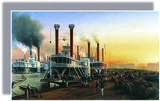
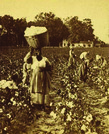
By the end of this section, you will be able to:Explain the labor-intensive processes of cotton productionDescribe the importance of cotton to the Atlantic and American antebellum economy
U.S. History is designed for a two-semester American history sequence. It is …
U.S. History is designed for a two-semester American history sequence. It is traditional in coverage, following a roughly chronological outline, and using a balanced approach that includes political, economic, social, and cultural developments. At the same time, the book includes a number of innovative and interactive features designed to enhance student learning. Instructors can also customize the book, adapting it to the approach that works best in their classroom.
No restrictions on your remixing, redistributing, or making derivative works. Give credit to the author, as required.
Your remixing, redistributing, or making derivatives works comes with some restrictions, including how it is shared.
Your redistributing comes with some restrictions. Do not remix or make derivative works.
Most restrictive license type. Prohibits most uses, sharing, and any changes.
Copyrighted materials, available under Fair Use and the TEACH Act for US-based educators, or other custom arrangements. Go to the resource provider to see their individual restrictions.