A mathematics task that involves a multi-step word problem related to addition …
A mathematics task that involves a multi-step word problem related to addition and subtraction situations. Students are expected to model with mathematics as they complete the task. Task relates to standard 2.OA. A.1
This task has student solve a two step word problem involving addition …
This task has student solve a two step word problem involving addition and division. Students identify flawed reasoning and provide a correct answer and explanation.
This resource is part of the San Francisco Unified School District Math …
This resource is part of the San Francisco Unified School District Math Core Curriculum for Grade 2. It includes numerous activities to help students build fluency for addition within 20.
This short video and interactive assessment activity is designed to teach second …
This short video and interactive assessment activity is designed to teach second graders about mixed operations: addition and subtraction i - word problems.
This short video and interactive assessment activity is designed to teach second …
This short video and interactive assessment activity is designed to teach second graders about adding and subtracting (numbers up to 20) - word problems.
In this lesson, students will develop their fluency with addition and subtraction …
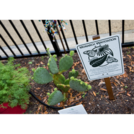
In this lesson, students will develop their fluency with addition and subtraction through a "real-world" application of collecting data about insects in the garden.
Students will use objects found in the outdoor classroom to create rectangular …
Students will use objects found in the outdoor classroom to create rectangular arrays and write equations to express the total. Standard(s): 2.NC.OA.4Use addition to find the total number of objects arranged in rectangular arrays with up to 5 rows and up to 5 columns; write an equation to express
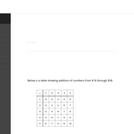
The purpose of this task is to study some patterns in a …
The purpose of this task is to study some patterns in a small addition table. Each pattern identified persists for a larger table and if more time is available for this activity students should be encouraged to explore these patterns in larger tables.
Objectives: Students will be able to comprehend the steps necessary to solve …
Objectives: Students will be able to comprehend the steps necessary to solve addition problems in 3 different ways (logical, physical, visual). Students will be completing a worksheet activity in groups of 4-5. Students should complete this assignment by the end of class.
No restrictions on your remixing, redistributing, or making derivative works. Give credit to the author, as required.
Your remixing, redistributing, or making derivatives works comes with some restrictions, including how it is shared.
Your redistributing comes with some restrictions. Do not remix or make derivative works.
Most restrictive license type. Prohibits most uses, sharing, and any changes.
Copyrighted materials, available under Fair Use and the TEACH Act for US-based educators, or other custom arrangements. Go to the resource provider to see their individual restrictions.