The National Center on Accessible Instructional Materials and PACER Center are pleased …
The National Center on Accessible Instructional Materials and PACER Center are pleased to announce the release of our new video explaining Accessible Instruc...
This Module highlights classroom considerations that promote access to the general education …
This Module highlights classroom considerations that promote access to the general education curriculum for students with disabilities (est. completion time: 1.5 hours).
The resources in this Module offer helpful tips on setting up the …
The resources in this Module offer helpful tips on setting up the physical aspects of your classroom and will introduce types of equipment used by students with visual disabilities (est. completion time: 1 hour).
This class explores the interrelationship between humans and natural environments. It does …
This class explores the interrelationship between humans and natural environments. It does so by focusing on conflict over access to and use of the environment as well as ideas about "nature" in various parts of the world.
For many Americans, their fondest memories revolve around a library card. From …
For many Americans, their fondest memories revolve around a library card. From searching through the stacks, to getting a return date stamped on the back of a new favorite book, libraries are a quintessential part of how Americans learn and engage with their local communities. Since this countrys founding, public libraries have received broad and consistent popular support for their democratic missions and services. The ability to access free information has become a core ideal of what it means to be an American citizen, despite periods of historic inequality. Libraries help make this access possible by placing public benefit at the center of their work and continually adapting their strategies to meet changing public needs over time. This exhibition tells the story of the American public library system, its community impact, and the librarians who made it possiblefrom the founding of the first US libraries through the first one hundred years of service. This exhibition was created as part of the DPLAs Public Library Partnerships Project in collaboration with partners and participants from Digital Commonwealth, Digital Library of Georgia, Minnesota Digital Library, Montana Memory Project, and Mountain West Digital Library.
This course is a seminar in real-time language comprehension. It considers models …
This course is a seminar in real-time language comprehension. It considers models of sentence and discourse comprehension from the linguistic, psychology, and artificial intelligence literature, including symbolic and connectionist models. Topics include ambiguity resolution and linguistic complexity; the use of lexical, syntactic, semantic, pragmatic, contextual and prosodic information in language comprehension; the relationship between the computational resources available in working memory and the language processing mechanism; and the psychological reality of linguistic representations.
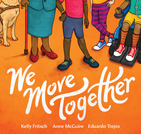
This learning guide offers educators context, vocabulary, discussion questions, learning activities, printable games and templates, and other resources to support conversations about disability, accessibility, social justice, and community building. We Move Together is a bold and colourful exploration of all the ways that people navigate through the spaces around them and a celebration of the relationships we build along the way. We Move Together follows a mixed-ability group of kids as they creatively negotiate everyday barriers and find joy and connection in disability culture and community.
The focus of many open education projects is to provide access to …
The focus of many open education projects is to provide access to education. But what does access mean? If the materials are not accessible for each and every student, do they fulfill the mandate to deliver fully open education? The open education movement has helped people in different parts of the world access content that they would otherwise not be able to view or interact with. Open education resources reduce costs for students and allow for greater flexibility for instructors. Accessibility can help push the movement even further forward.
The goal of the OER Accessibility Toolkit is to provide the needed resources needed to each content creator, instructor, instructional designer, educational technologist, librarian, administrator, and teaching assistant to create a truly open and accessible educational resource — one that is accessible for all students.
Oregon Department of Education's Program Analyst and Instructional Materials Coordinator Aujalee Moore …
Oregon Department of Education's Program Analyst and Instructional Materials Coordinator Aujalee Moore shares the states processes and guidelines for school district purchases of accessible curriculum and supplemental materials for K-12.
This lesson on the nature and cost of scholarly publishing could be …
This lesson on the nature and cost of scholarly publishing could be taught by itself, or as part of a series on scholarly communication, or as a small part of a larger lesson on information privilege.
The Maryland State Department of Education is working to prevent the misuse and …
The Maryland State Department of Education is working to prevent the misuse and abuse of opioids. This is a student-centered lesson for the 3-5 grade band. This lesson can be modified or remixed to meet the needs of the students you teach. The content of this lesson includes teaching students by definition what is prescription medicine and non-prescription medicine and emphasizing that medication, whether it is prescription or non-prescription, should be administered in the presence of a trusted adult. Students are also required to examine Drug Fact Labels and demonstrate understanding of the information found on the Drug Fact Labels.
No restrictions on your remixing, redistributing, or making derivative works. Give credit to the author, as required.
Your remixing, redistributing, or making derivatives works comes with some restrictions, including how it is shared.
Your redistributing comes with some restrictions. Do not remix or make derivative works.
Most restrictive license type. Prohibits most uses, sharing, and any changes.
Copyrighted materials, available under Fair Use and the TEACH Act for US-based educators, or other custom arrangements. Go to the resource provider to see their individual restrictions.